
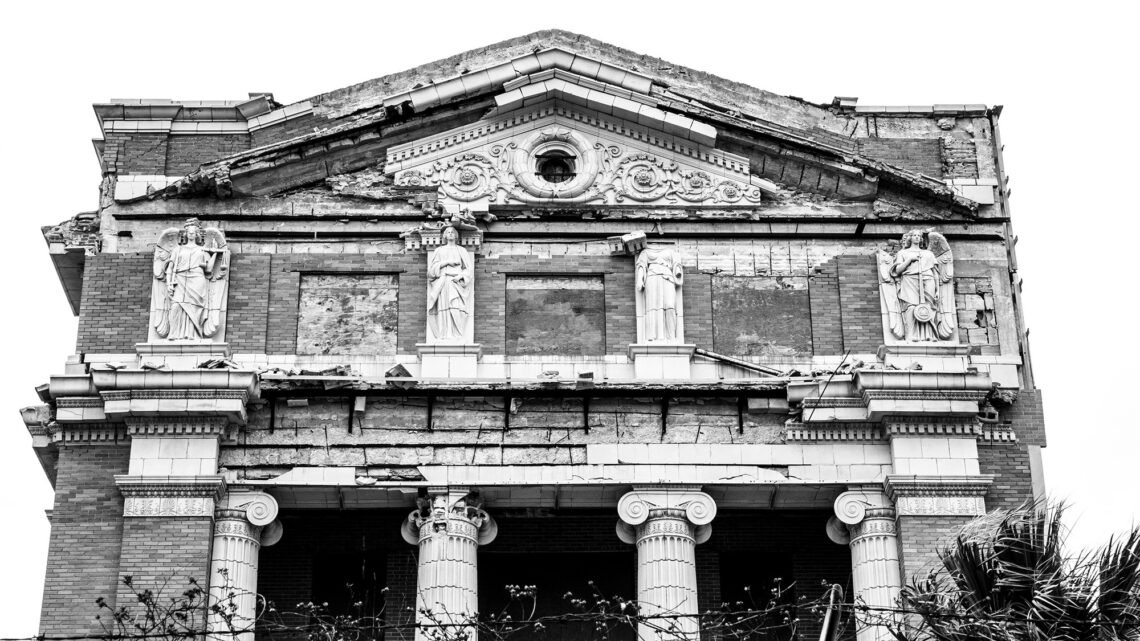
As the Old Nueces County Courthouse in Corpus Christi edges closer and closer to being torn down, it’s worth taking the time to admire this impressive example of classical architecture. Completed in 1914, this grand building once embodied the aspirations of a rapidly growing region, rising proudly near the shores of the community it helped serve for over six decades. Now it sits behind chainlink fence and is slowly decaying. And while its best days may be far behind, many of the classic details that made it special are still visible today. The building itself is obviously not open to visitors and the grounds are fenced off, but there is a lot that can still be seen from the small park across the street. At least while it still stands.
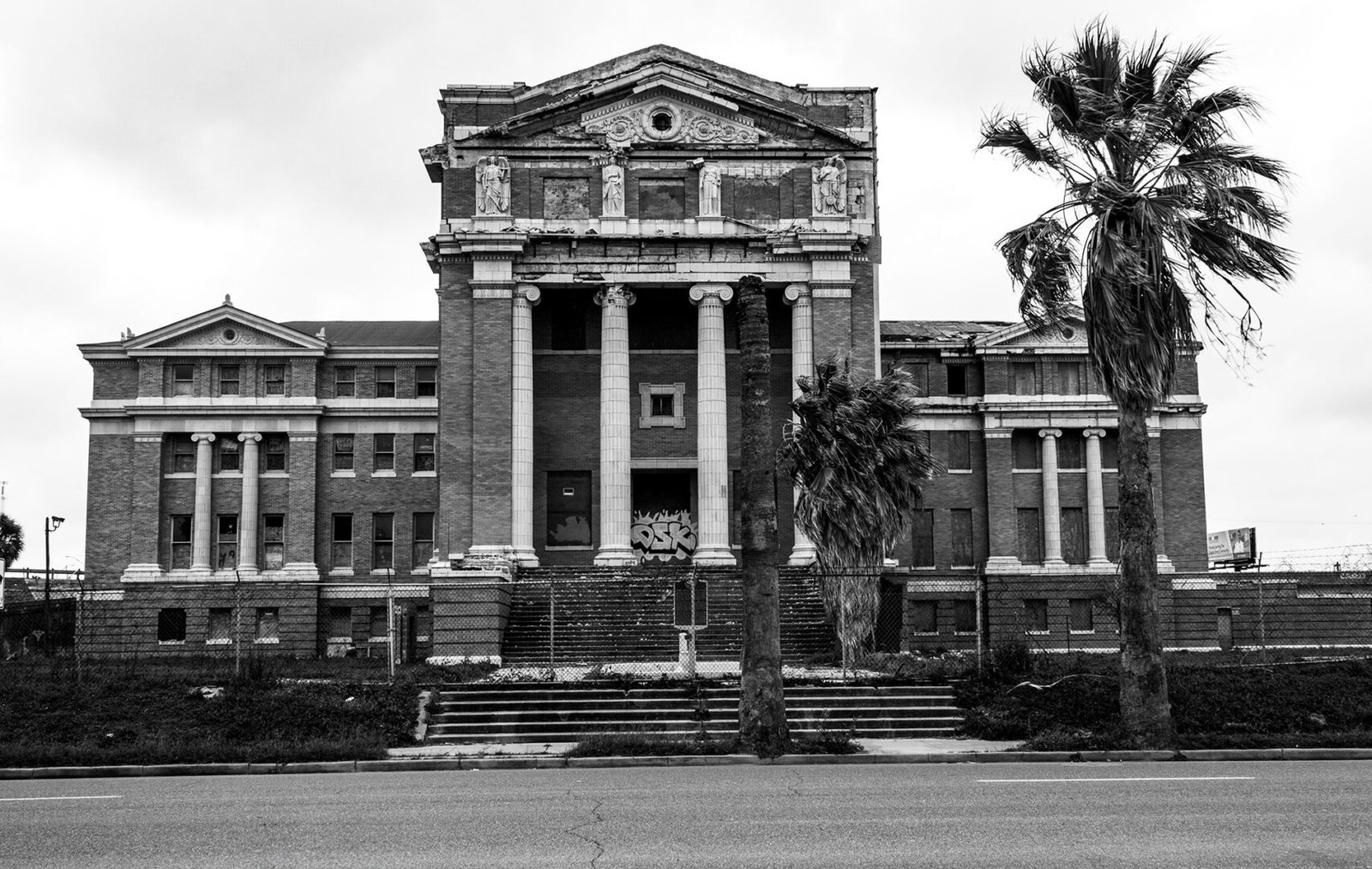
The historic courthouse emerged from the lawlessness that plagued early Nueces County, which once sprawled from Corpus Christi to the Mexican border. County commissioners acquired the site in 1853 from founder Henry Lawrence Kinney for $300. Earlier structures—a modest adobe building in 1855 and a second in the 1870s—proved to be inadequate as the county continued to evolve. Under County Judge Walter F. Timon, voters approved bonds in 1913 to construct a modern facility. Architect Harvey L. Page, a Washington, D.C. native who later practiced in San Antonio, designed the $250,000 project. Built primarily with Texas materials (save for Kansas roof tiles and Georgia marble interiors), it reflected civic pride and resilience in the early 20th century.
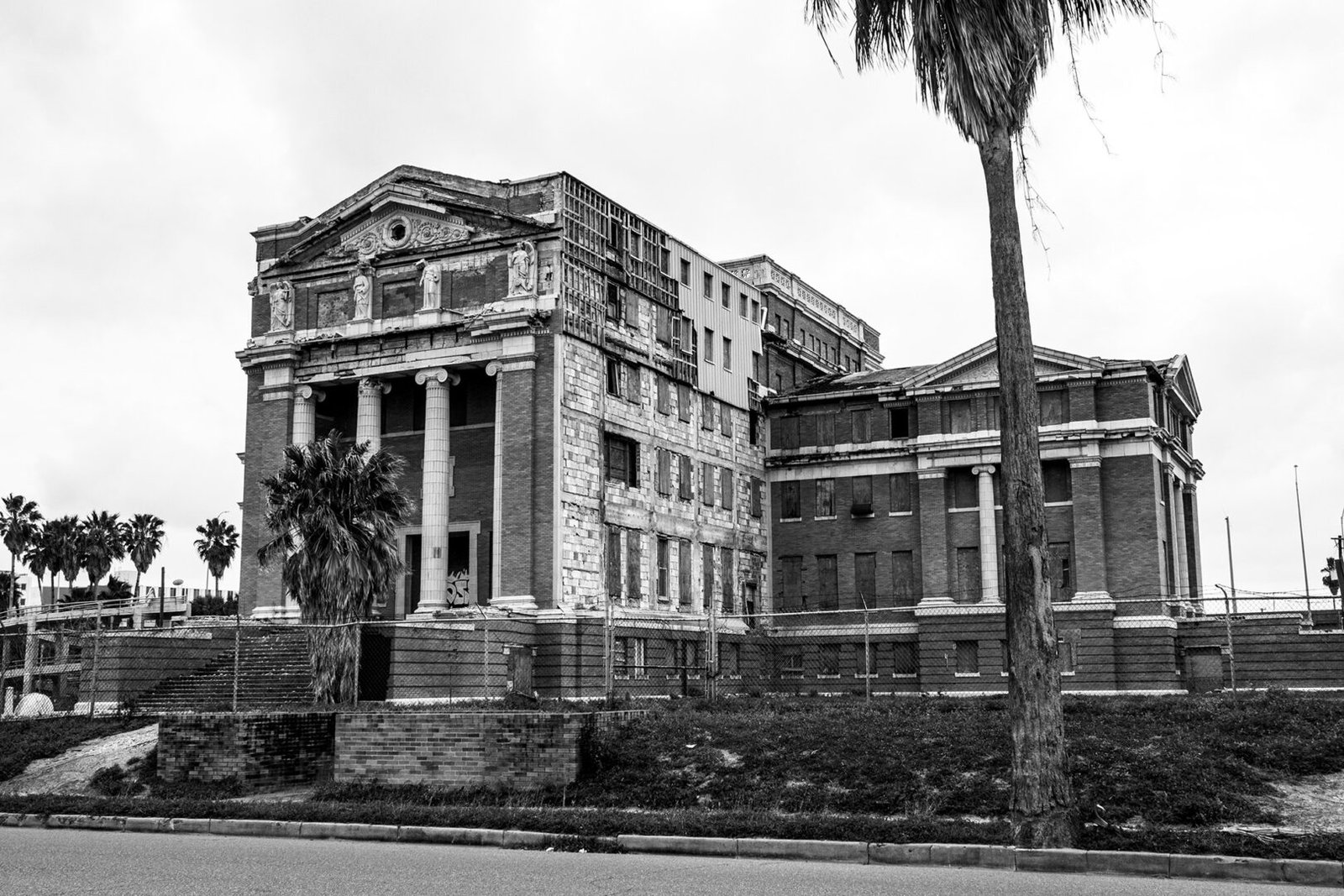
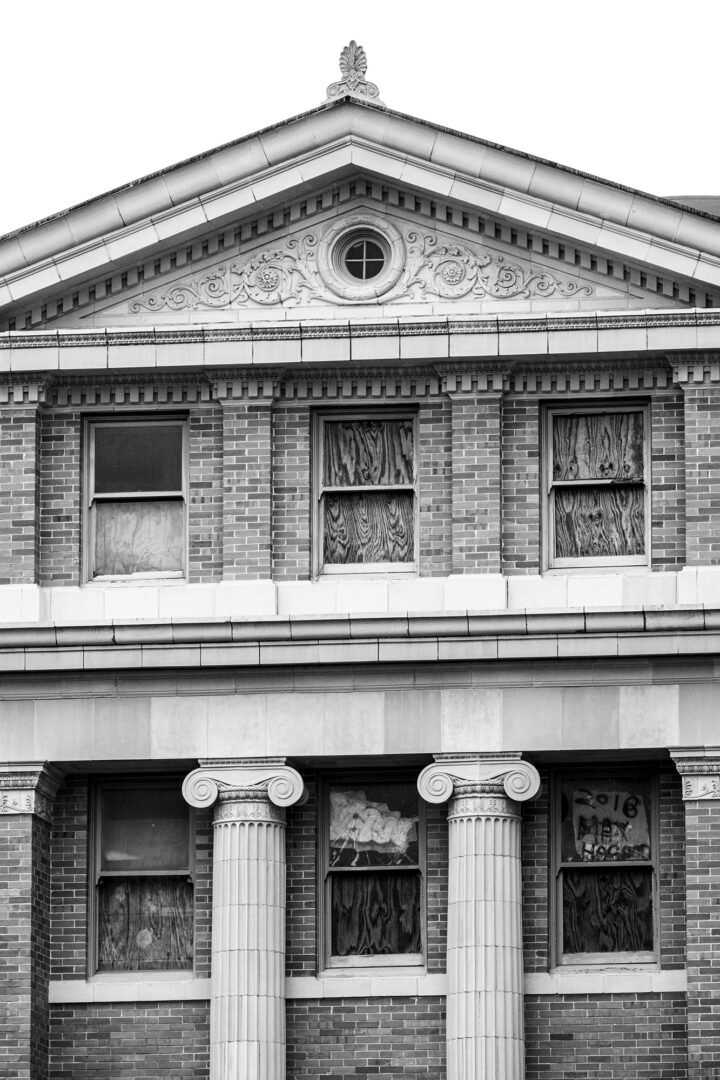
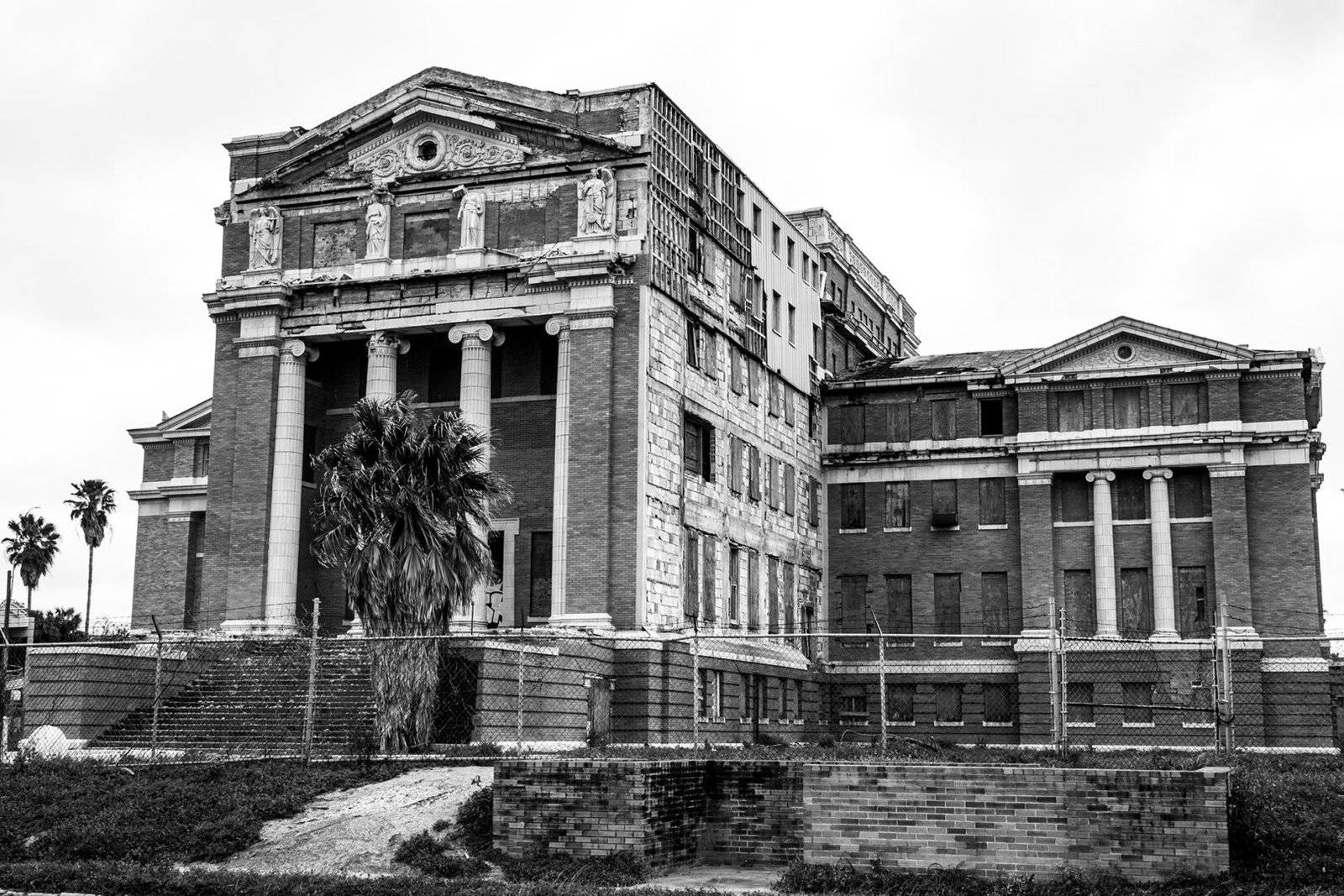
Page’s design embraced Classical Revival architecture, emphasizing symmetry, grandeur, and timeless civic ideals. The six-story building has a sturdy steel frame covered in soft gray brick, accented with crisp white terra cotta trim and a striking red tile roof. The main entrance on the east side, overlooking the bay, is reached by a wide set of stairs that lead up to a prominent front section. This entrance is framed by tall, elegant columns and flat brick decorations along the walls. In the 1930s, additions were made that gave the whole structure a cross-shaped layout, which fits naturally with the original design. At the south entrance, sculpted female figures (known as caryatids) stand like pillars, holding up a covered porch. These details echo the look of ancient Greek temples and represent strength and fairness in the delivery of justice.
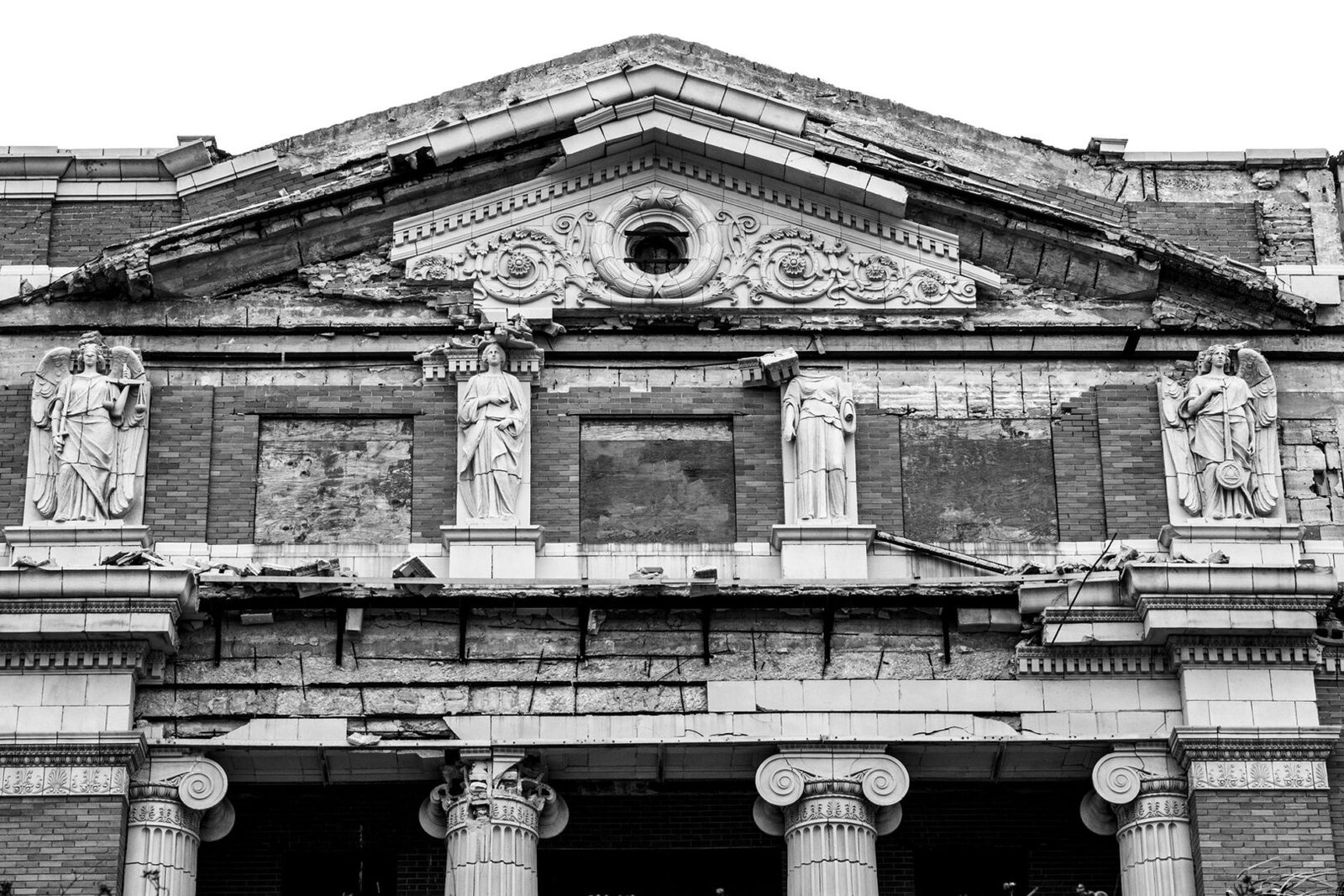
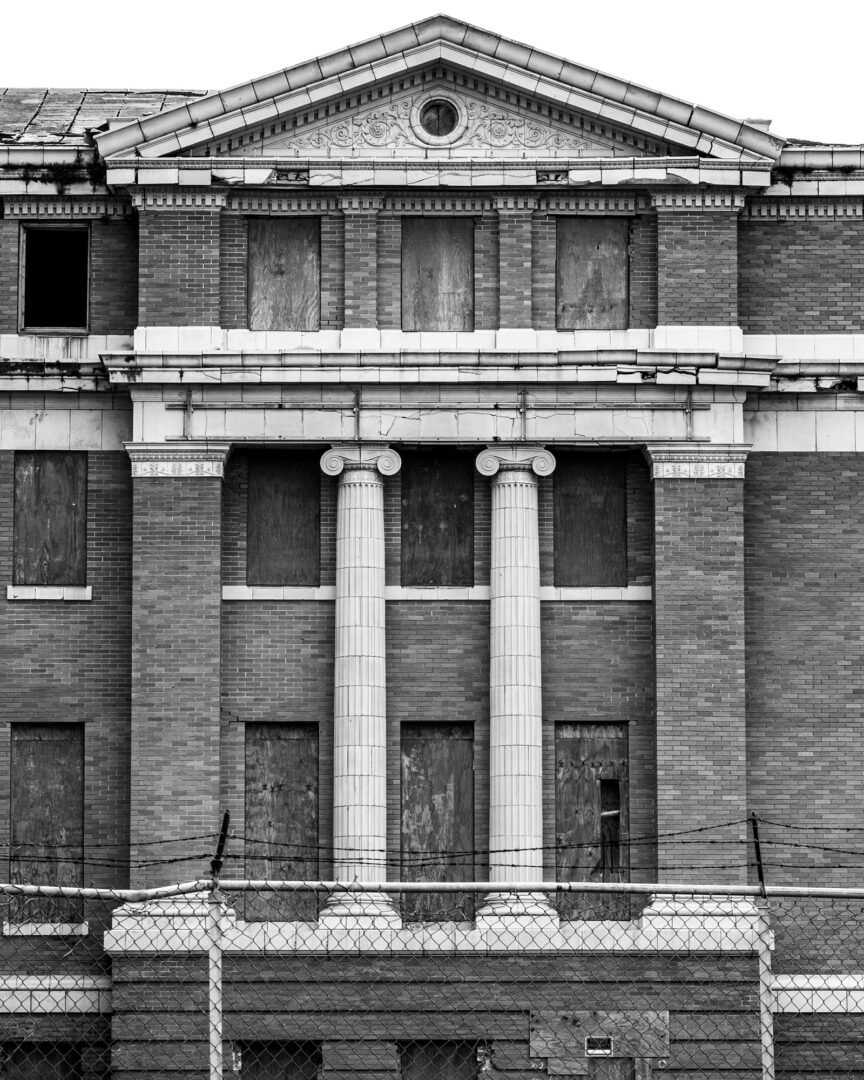
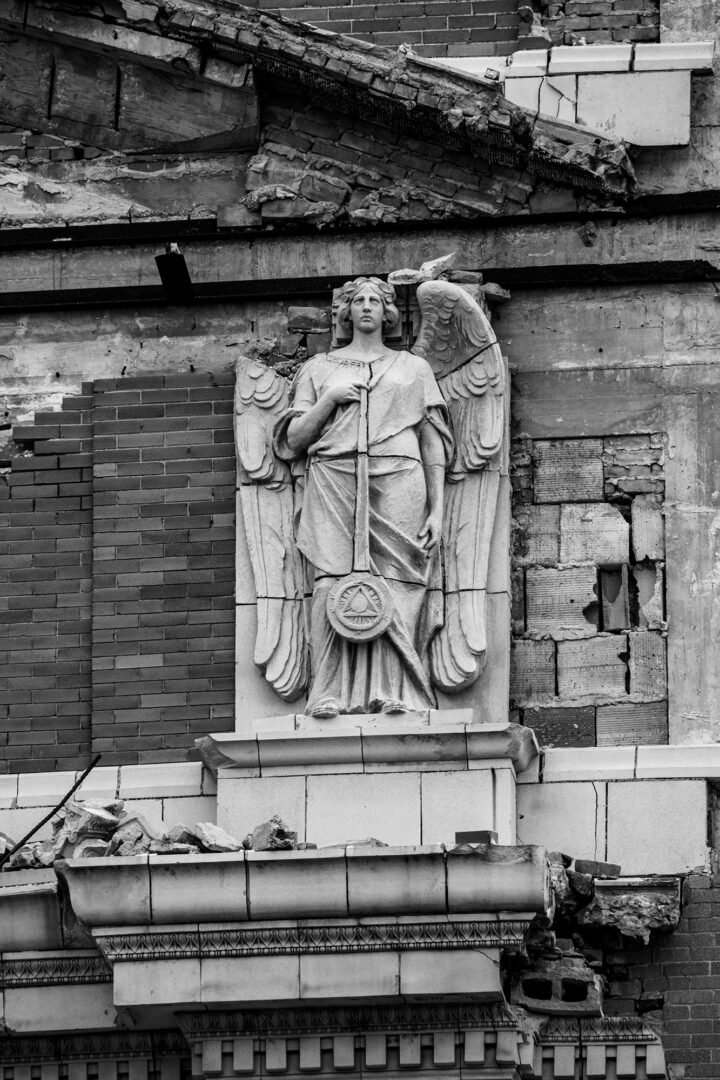
The building’s sculptural elements carry profound symbolism rooted in classical virtues. Four statues atop the main entrance represent Courage, Temperance, Wisdom, and Justice—the cardinal virtues guiding legal proceedings and public life. These figures, likely terra cotta or stone, reminded citizens and officials alike of the moral foundations of law. Bas-relief terra cotta panels and other ornamental details reinforce themes of balance, order, and civic duty. Roman-inspired lettering (with V’s for U’s) on inscriptions nods to ancient republican ideals, linking the young Texas county to enduring traditions of governance.
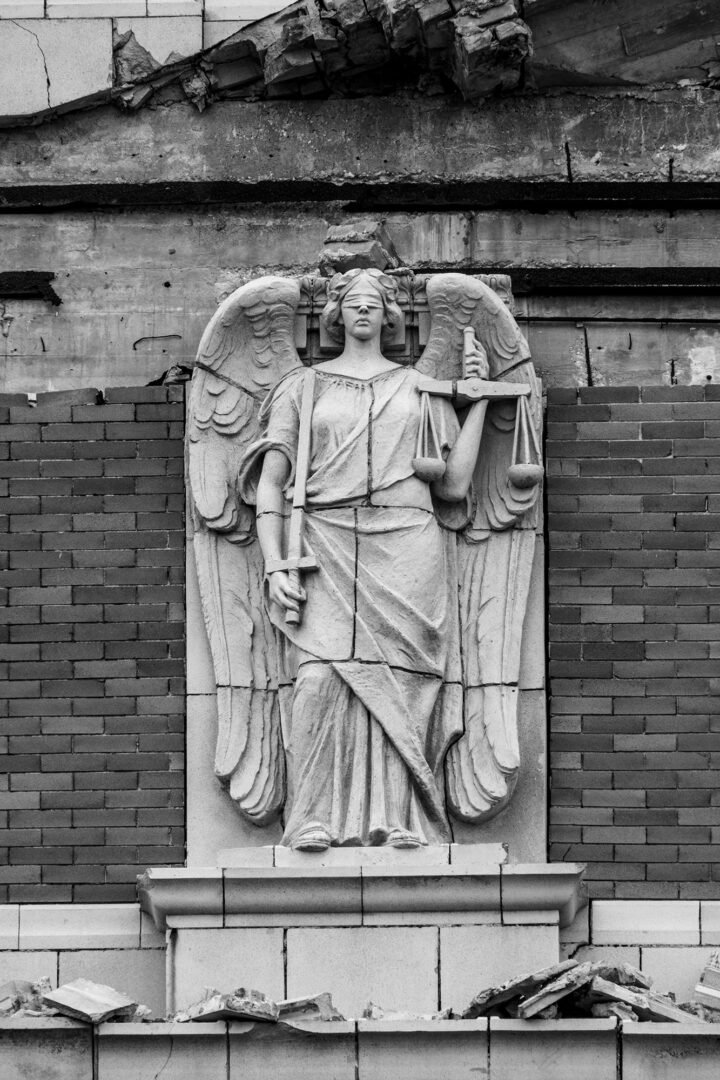
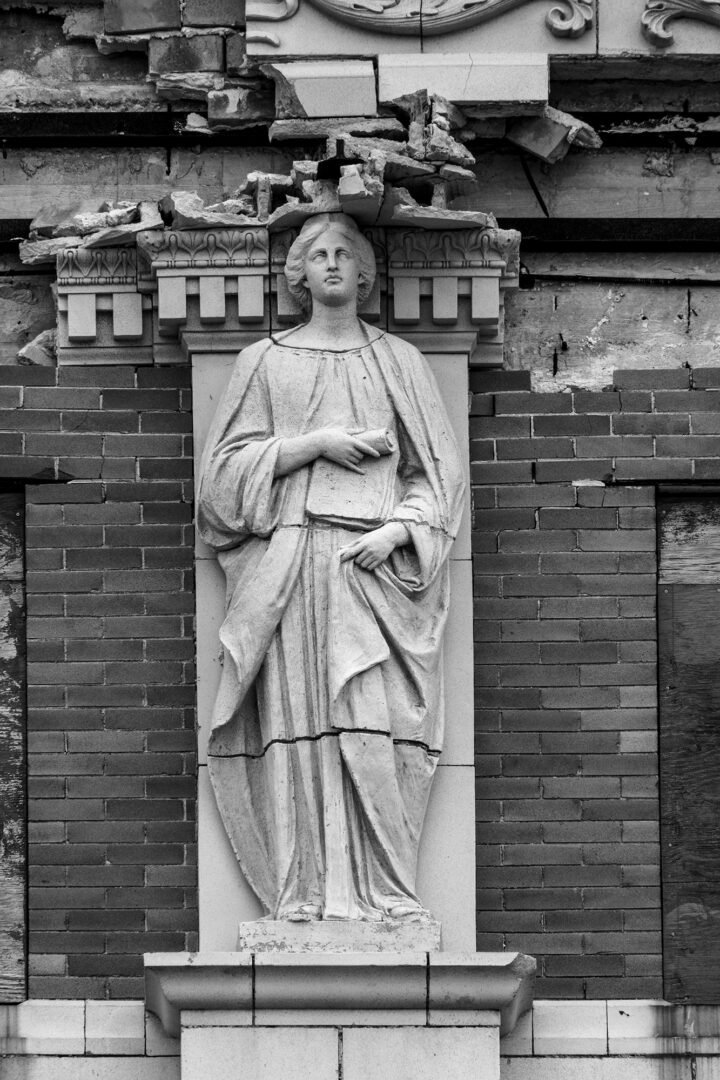
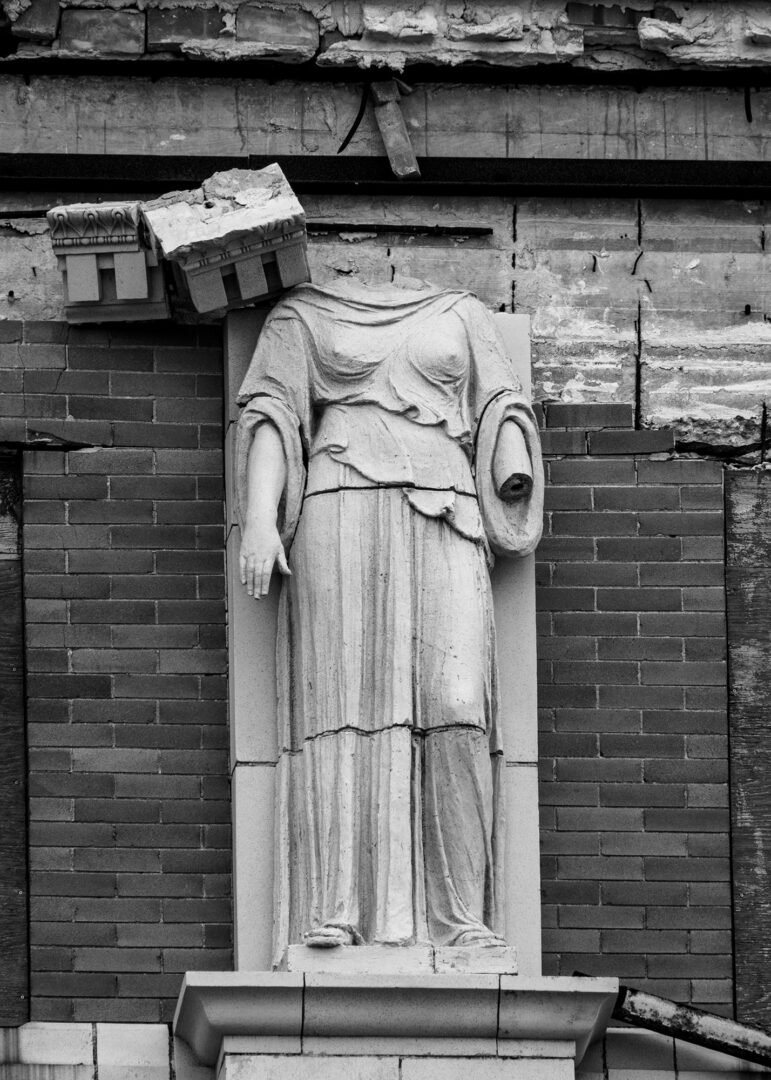
Beyond hosting countless trials and daily administrative functions, the courthouse also witnessed many dramatic events. It sheltered residents during the devastating 1919 hurricane, where a 16-foot storm surge ravaged the city. Along with many of other locals, a six year-old boy named Robert Simpson rode out the storm safely inside. Fifty years later he would go on to co-develop the Saffir-Simpson Hurricane Scale that we use today. And again, during Hurricane Carla in 1961, hundreds of people took shelter here, sleeping and eating inside for days. It continued to serve as a focal point of the city until 1977, when county operations moved to a new modern facility.
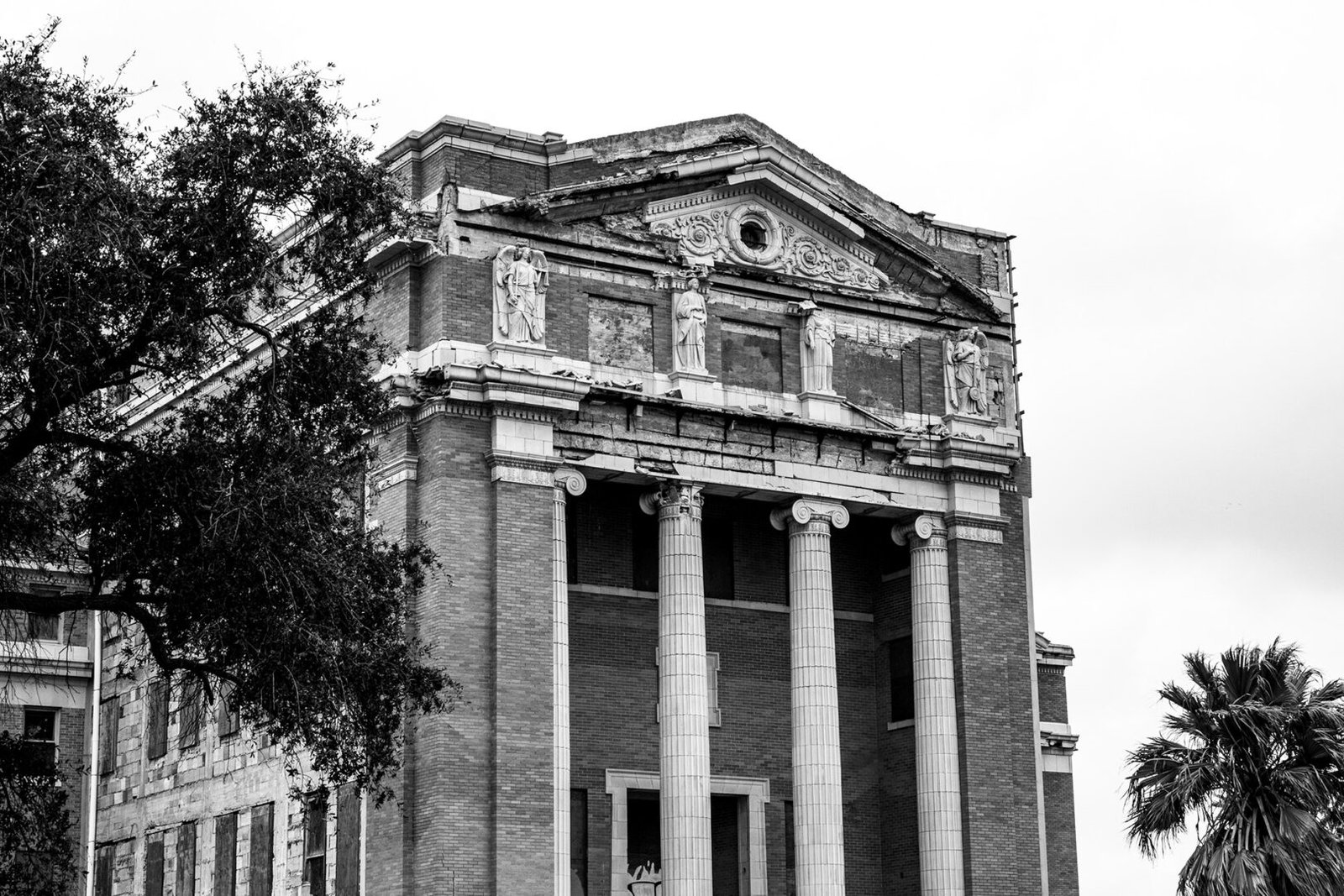
Today, the Old Nueces County Courthouse stands vacant and severely deteriorated after nearly five decades of abandonment. Once hailed as Texas’s most beautiful courthouse, it has become a safety hazard due to crumbling terra cotta and structural issues from years of neglect. In 2025, the Texas Historical Commission removed its preservation easement, clearing the path for demolition. According to latest reports, county leaders plan to raze the building in 2026, while salvaging artifacts, statues, and creating a historical record. Though preservation advocates push for adaptive reuse—perhaps as a hotel, museum, or cultural space—demolition appears likely by 2028, marking the end of a landmark that shaped Corpus Christi’s identity.
As travelers wander Corpus Christi’s historic downtown, the old courthouse reminds us of the fragile balance between progress and preservation. The building symbolized law and order in a once-lawless region and endured as a refuge amid coastal storms. Its role in everyday justice and dramatic survival stories adds rich layers to its history, even as it faces an uncertain future. And even after the courthouse is gone, its legacy will endure as part of the city’s ever-evolving narrative.