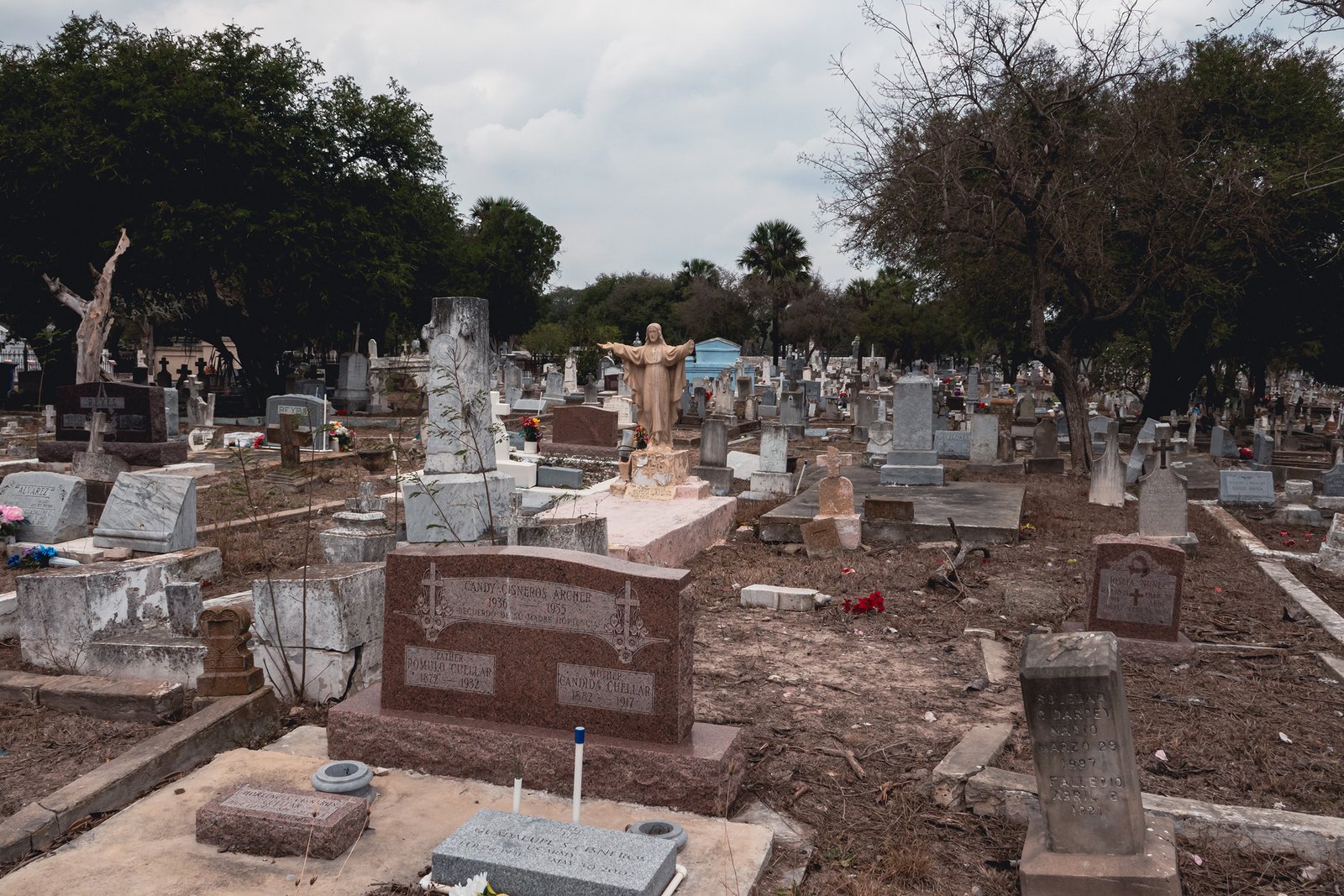
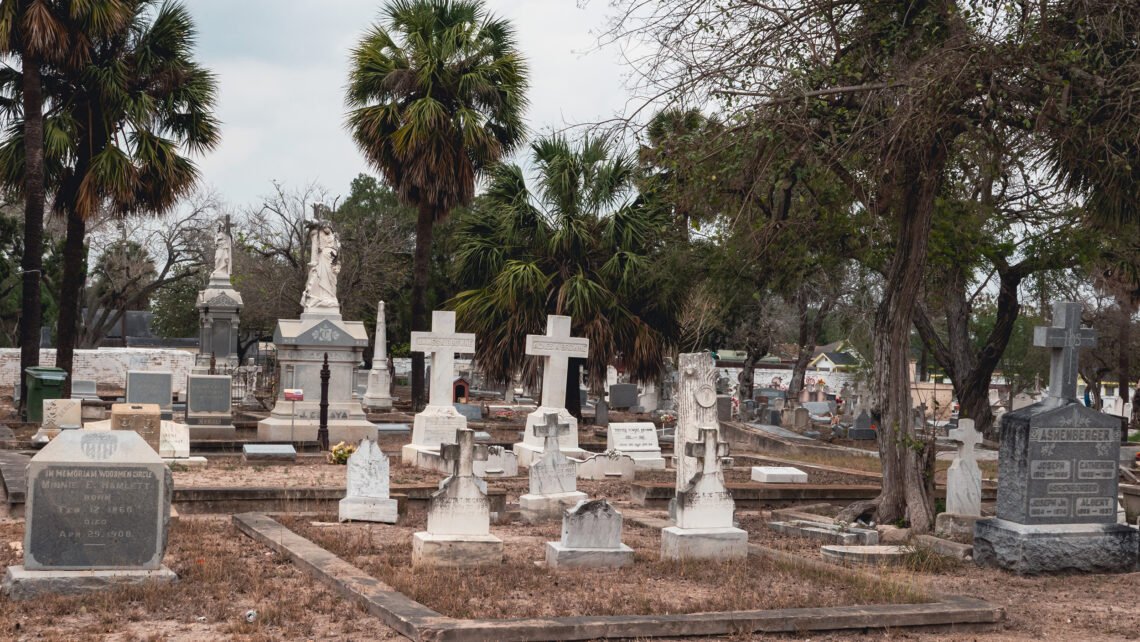
Resting in the historic Buena Vida neighborhood, Brownsville’s Old City Cemetery offers visitors a poignant, shaded sanctuary where the border town’s multicultural past comes vividly to life. Established around 1850 and formally deeded to the city in 1868, this nearly five-acre site stands as one of South Texas’s most significant historic landmarks. Listed on the National Register of Historic Places in 2010, it chronicles the frontier struggles, epidemics, and cultural fusion of the people that shaped the Rio Grande Valley.
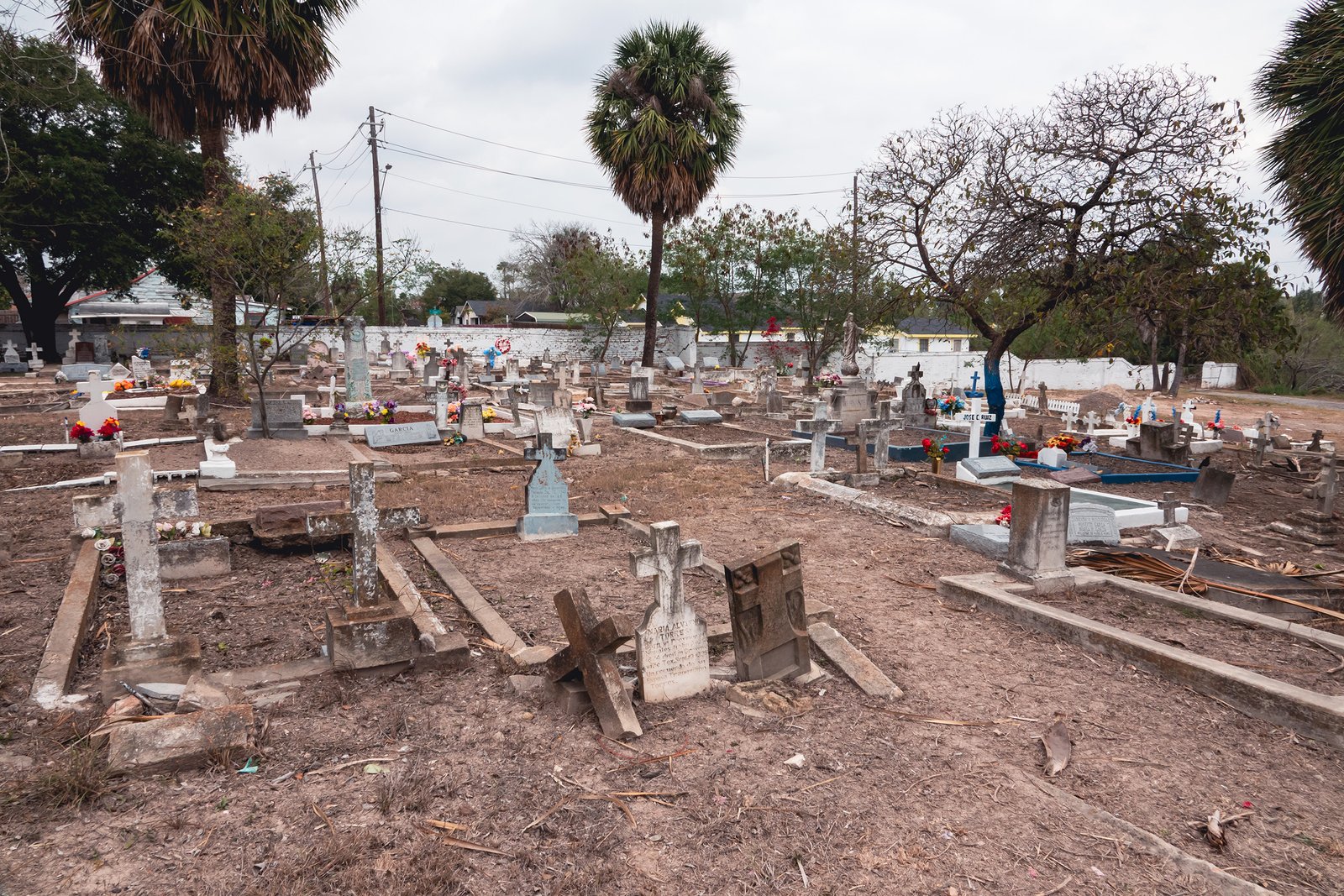
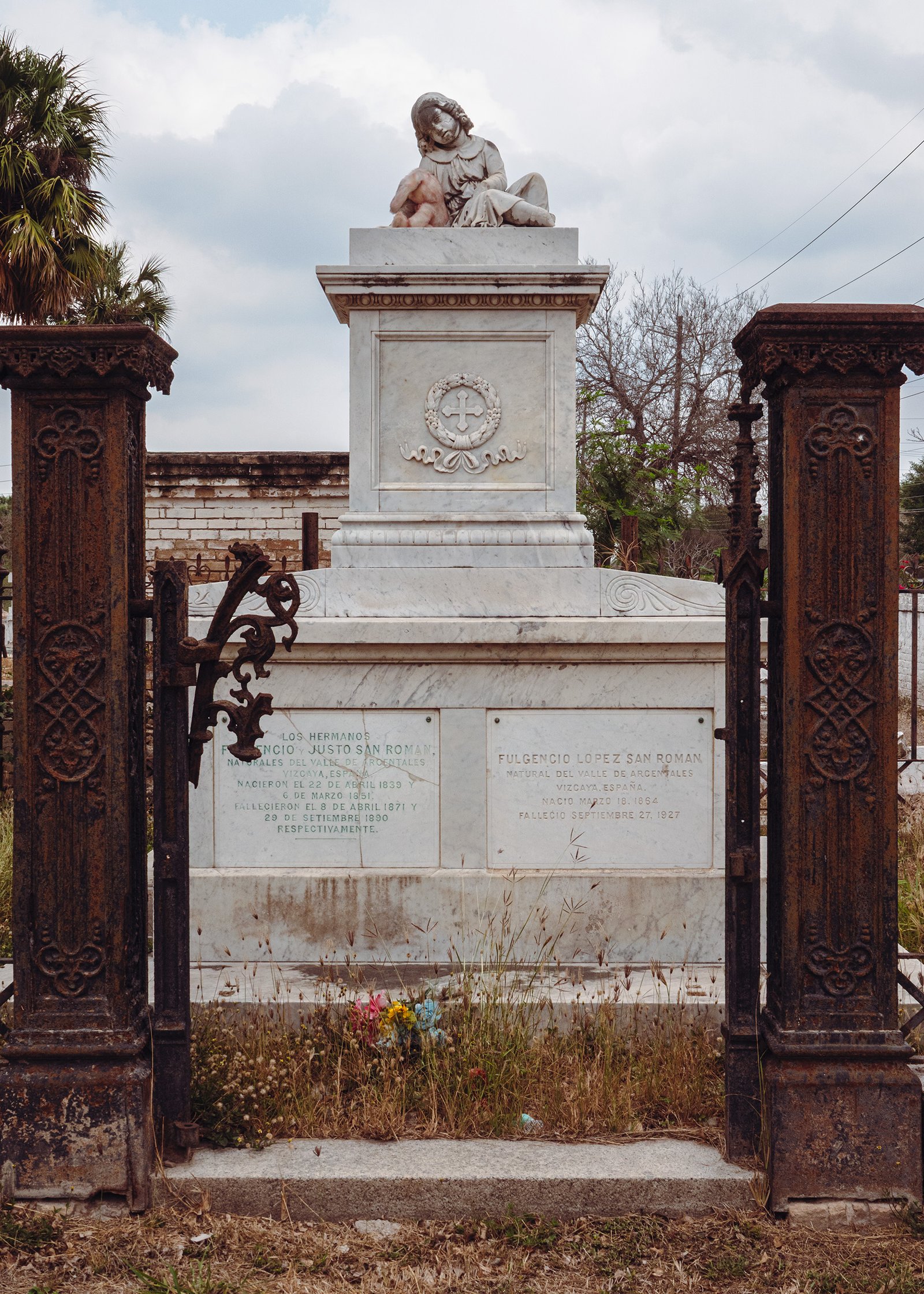
With early burials dating to the late 1850s, the cemetery gained increasing significance over time amid the hardships of a bustling border outpost. Victims of yellow fever and cholera outbreaks, gunfights, and wars rest here alongside early settlers, businessmen, and community leaders. The site reflects Brownsville’s role as a crossroads of people and cultures. Influences from nearby Matamoros, Mexico, and New Orleans appear in the ornate above-ground brick vaults and crypts designed to combat the high water table and frequent flooding. A five-foot-tall brick perimeter wall from 1868 frames the grounds, while a brick-paved internal road leads visitors past family plots enclosed by low curbs or cast-iron fencing.
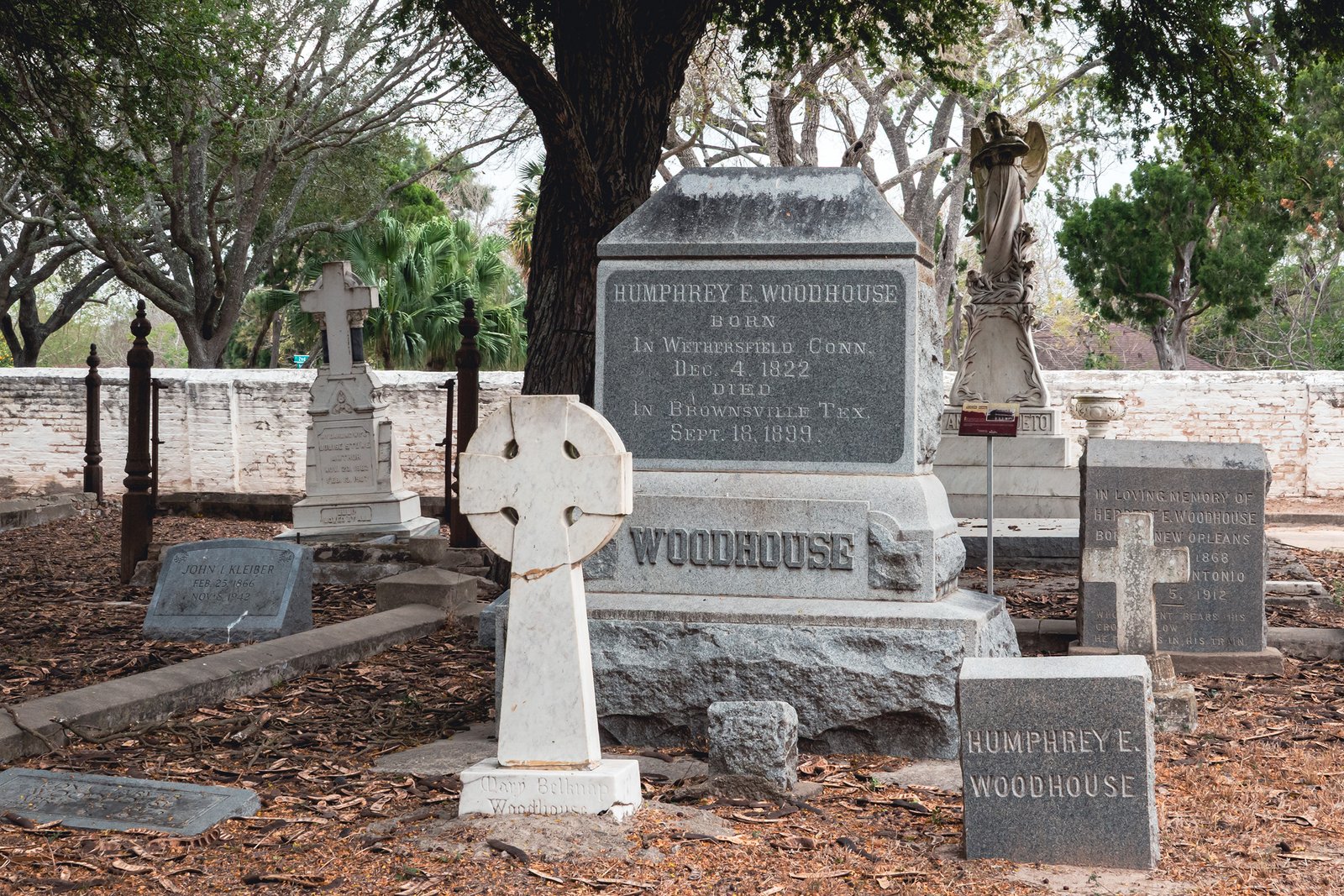
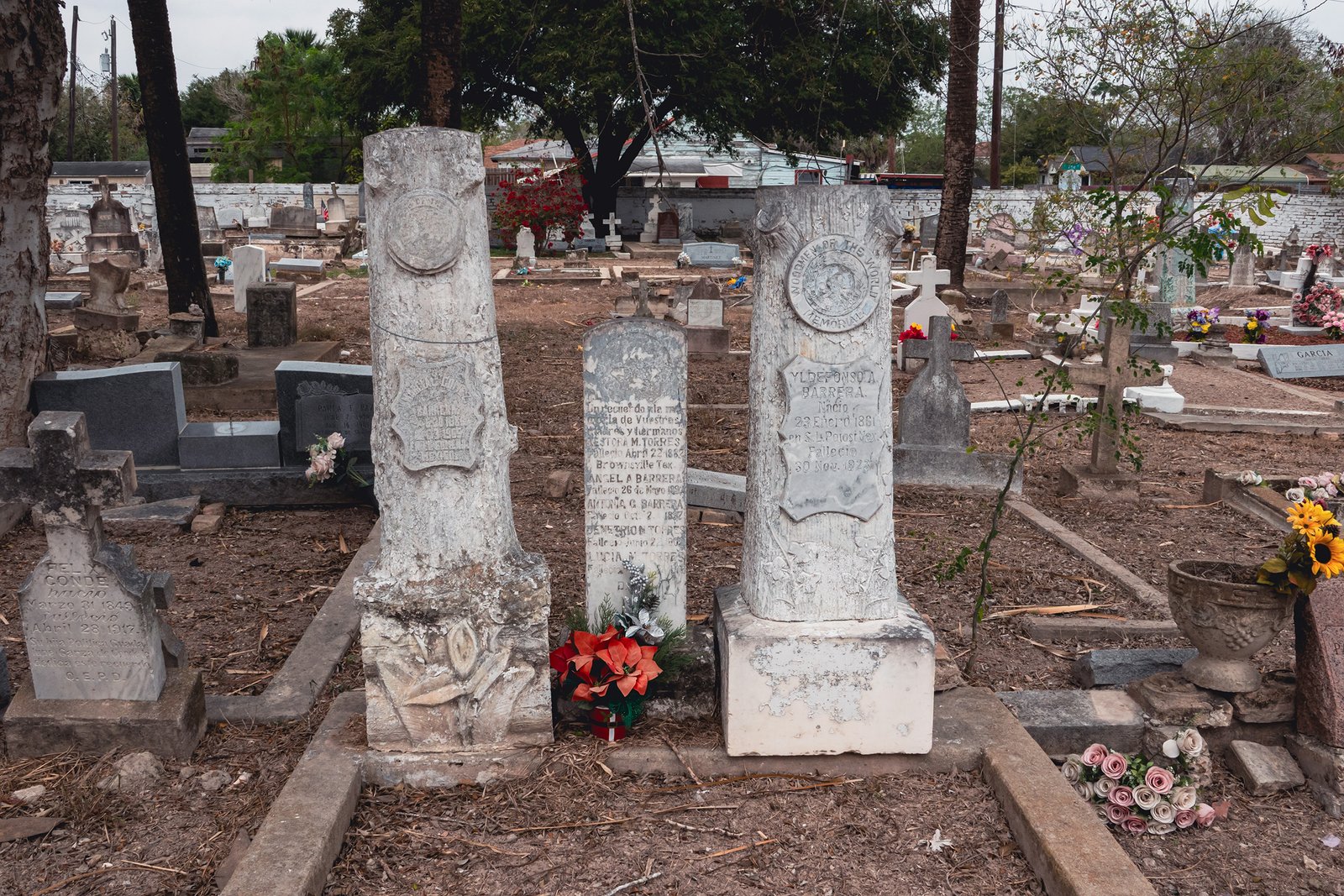
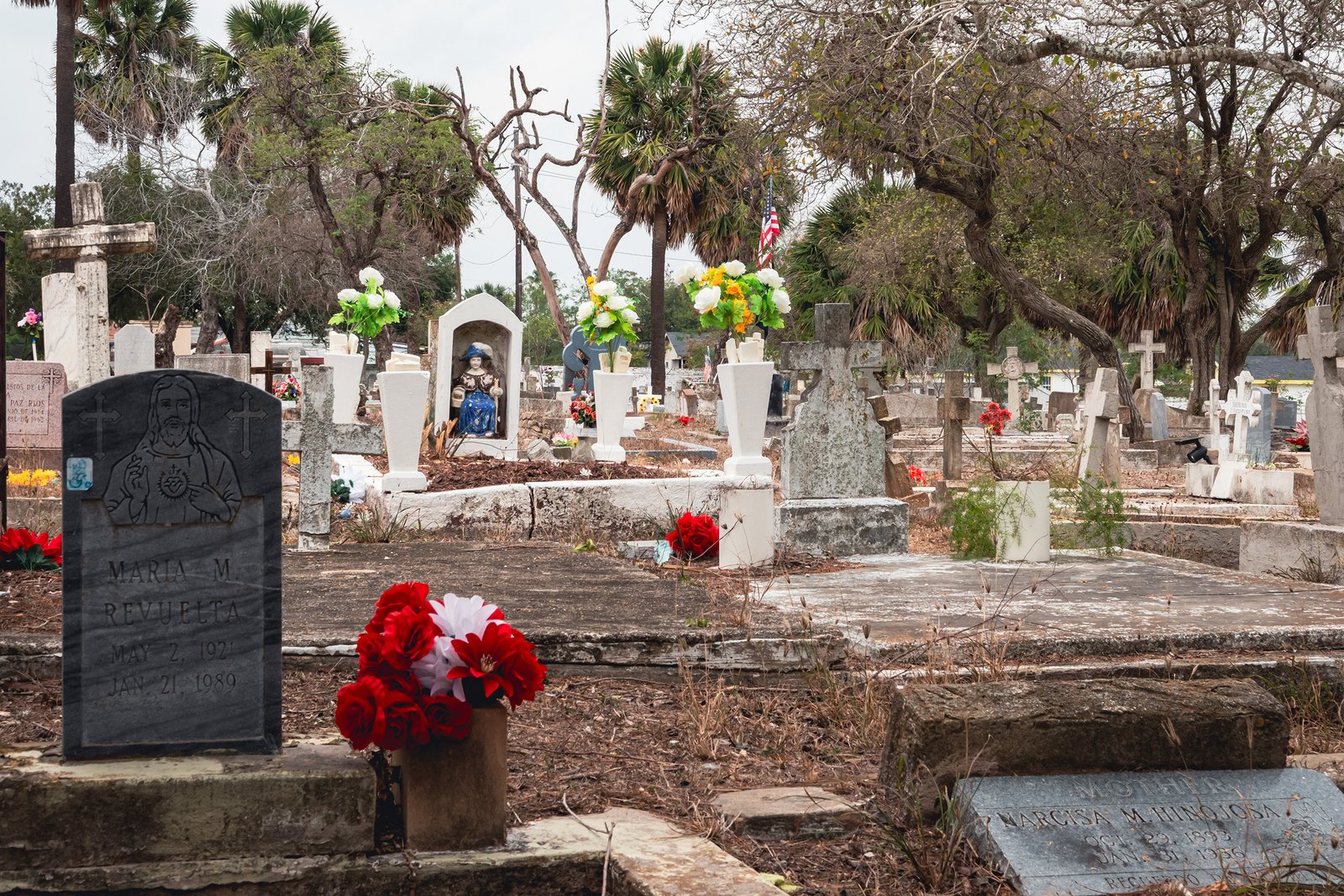
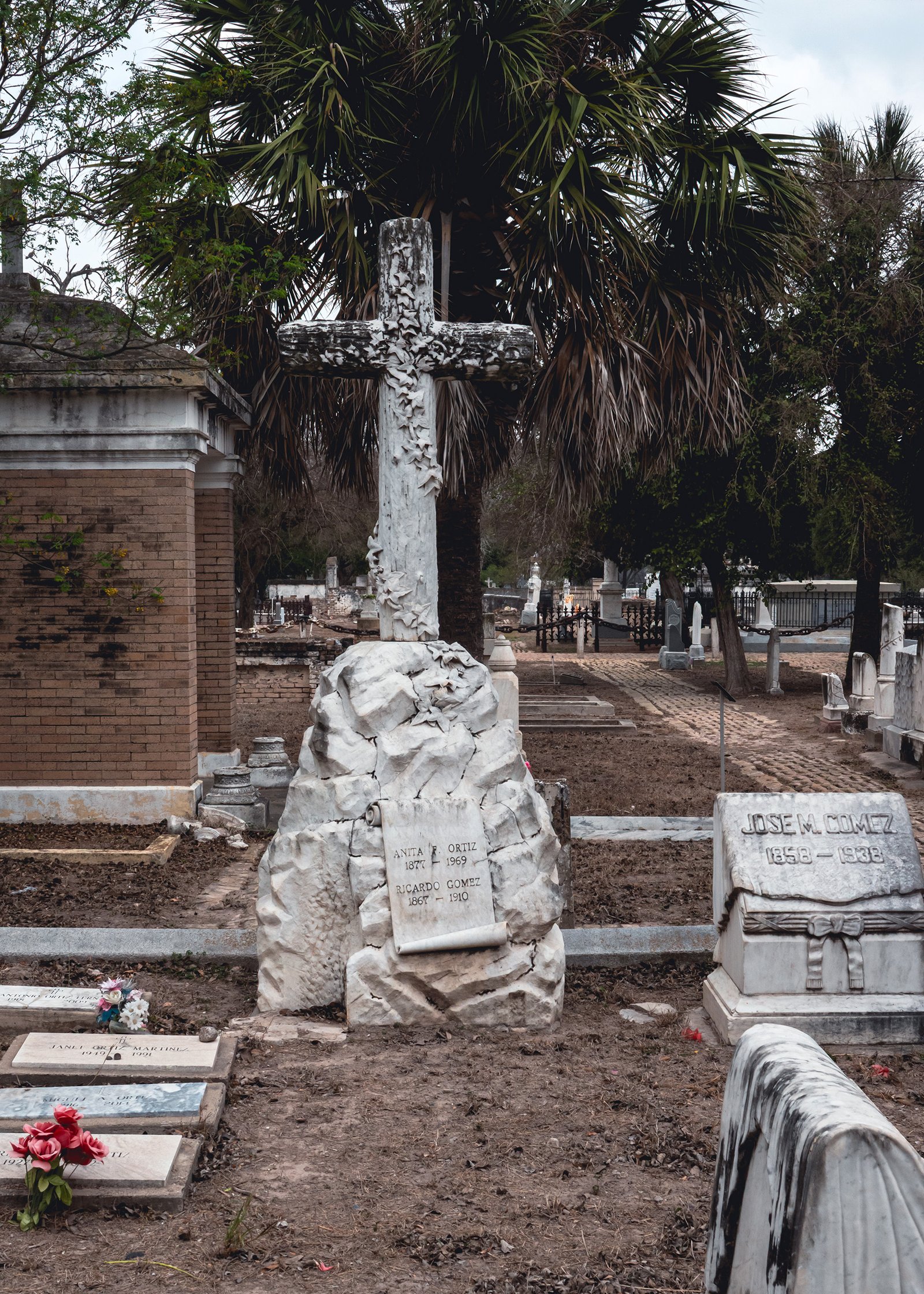
The markers themselves form a striking tapestry of styles and traditions. Nineteenth-century brick vaults stand among obelisks, crosses, statues, and simpler headstones, each one demonstrating the evolution of American funerary practices. Inscriptions appear in English, Spanish, French, and German, mirroring the city’s ethnic mosaic of Mexican, Anglo-American, European, and Jewish residents. Symbolic carvings—lambs for innocence, roses for love, doves for the soul, or pointing hands—add layers of meaning. Separate sections honor the Masonic Lodge and Catholic community, while the adjacent Hebrew Cemetery (established 1868) preserves the stories of Jewish merchants and leaders who helped build the region’s commerce.
Prominent figures interred here illuminate Brownsville’s dynamic history. The Rev. Hiram Chamberlain (1797–1866) founded the First Presbyterian Church and his daughter Henrietta married rancher Richard King of King Ranch fame. Israel B. Bigelow (1811–1869) served as the city’s first mayor and county judge. Mexican War surgeon Charles MacManus (1824–1906) and city/county leader Joseph Webb (1850–1933) also rest among the vaults. Sheriff Santiago A. Brito (1851–1892), a former newspaper owner, was elected sheriff in 1884 and later became city marshal. He solved high-profile cases before his assassination in 1892 when he was shot from behind while returning from a dance with his sons.
Particularly moving is the grave of four-year-old Daisy Starck, Brownsville’s first traffic fatality. In 1879 she was trampled by a horse and wagon. Visitors often leave toys at her plot beside her young cousin Freddy. Nearby lies Rafael Morales, a Mexican soldier who fought against Sam Houston at the 1836 Battle of San Jacinto and lived a colorful life marked by duels and border adventures before his death in 1887. The Hebrew section holds Jewish veterans from the Mexican-American War through Vietnam, Holocaust survivors, and civic leaders like merchant Joseph Alexander, who was killed by bandits in 1872.
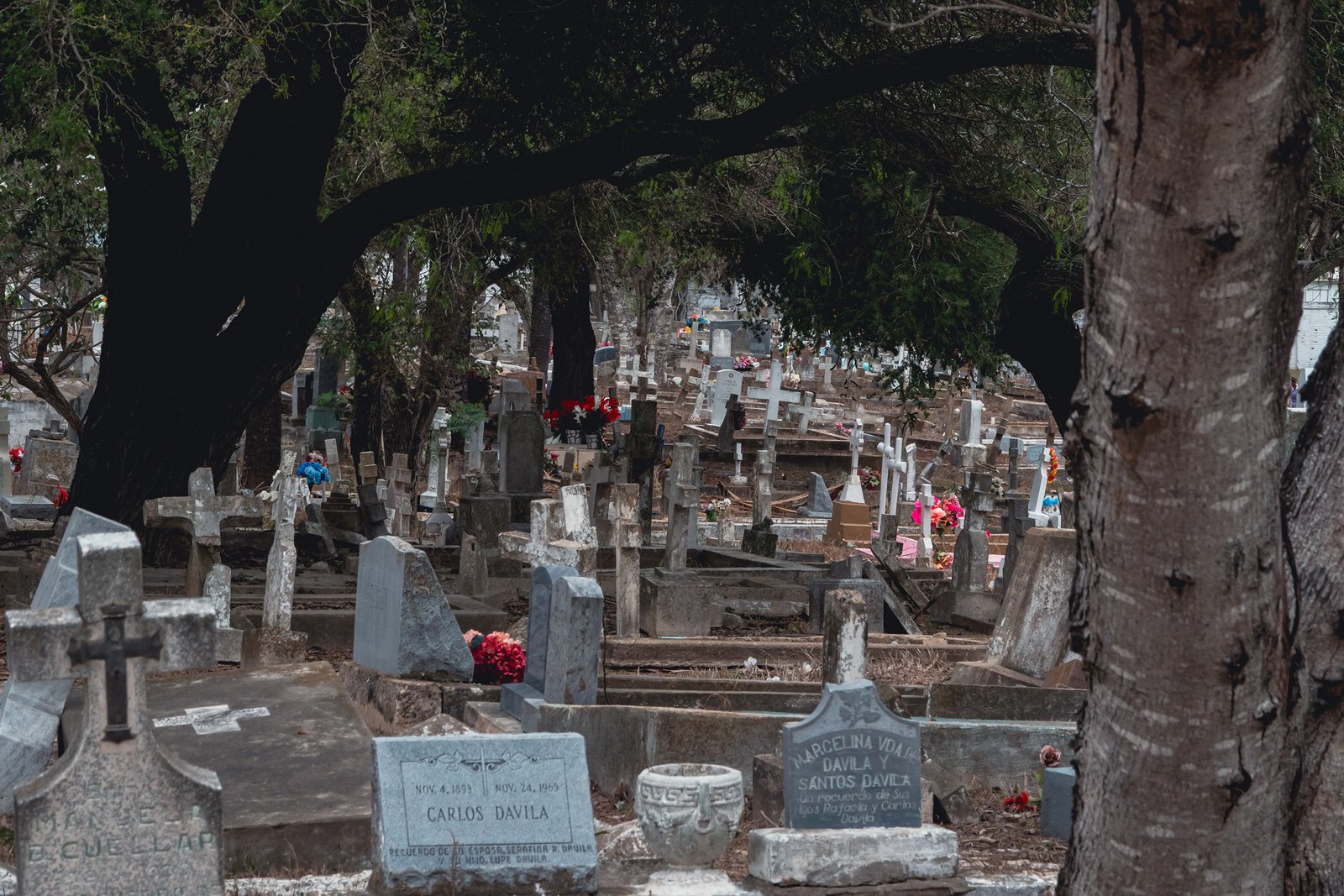
A visit to this cemetery feels intimate yet expansive. It remains active and open daily from 8 a.m. to 5 p.m. Start at the main gate on East Fifth Street and follow the interpretive signs displayed among the headstones and mausoleums. You can also get more information at the nearby Old City Cemetery Center (in the former Southern Pacific Railroad baggage room), which features exhibits on tombstone symbolism and local history. Respectful exploration—perhaps with a self-guided map or during special events—reveals the quiet beauty amid the monuments.
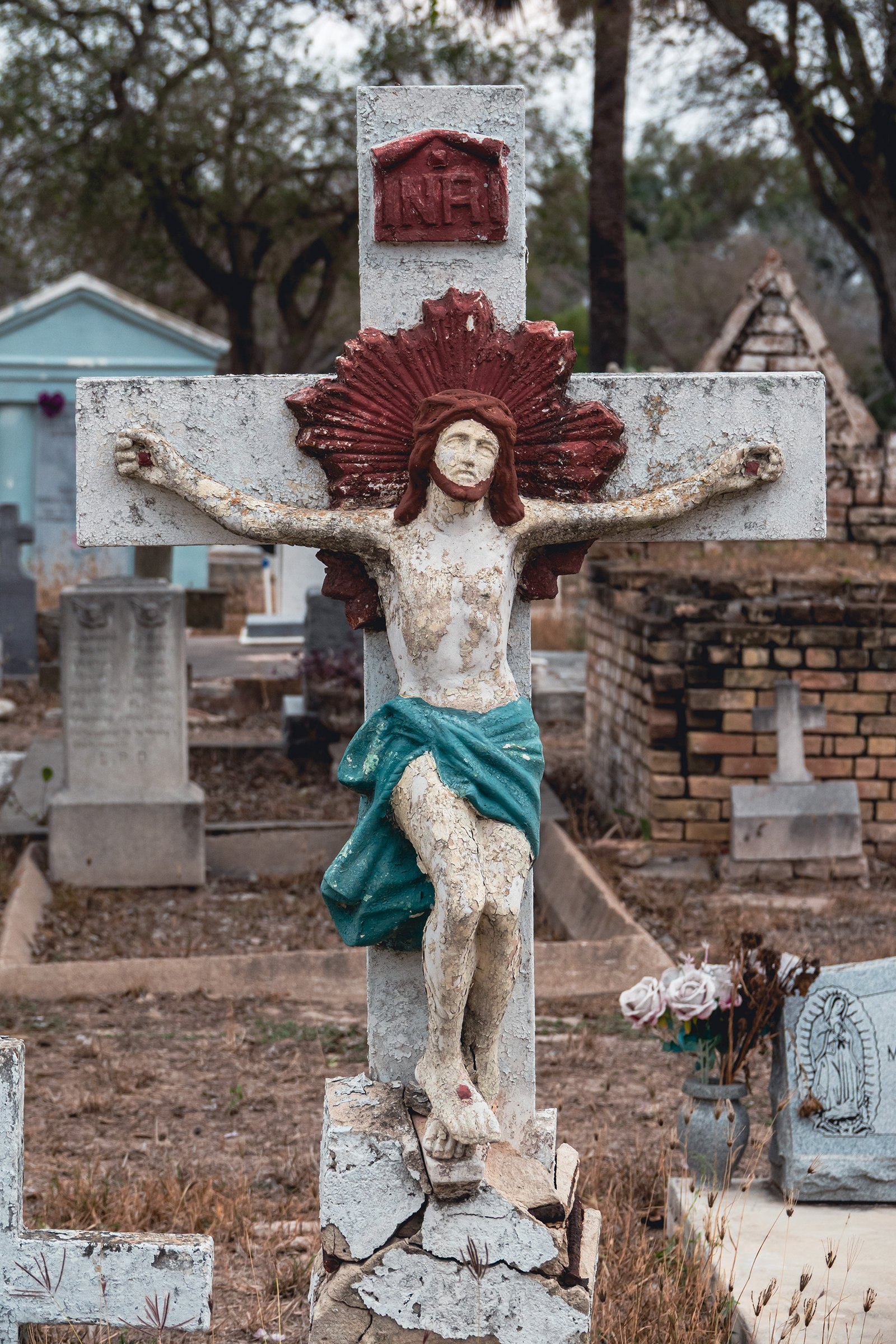
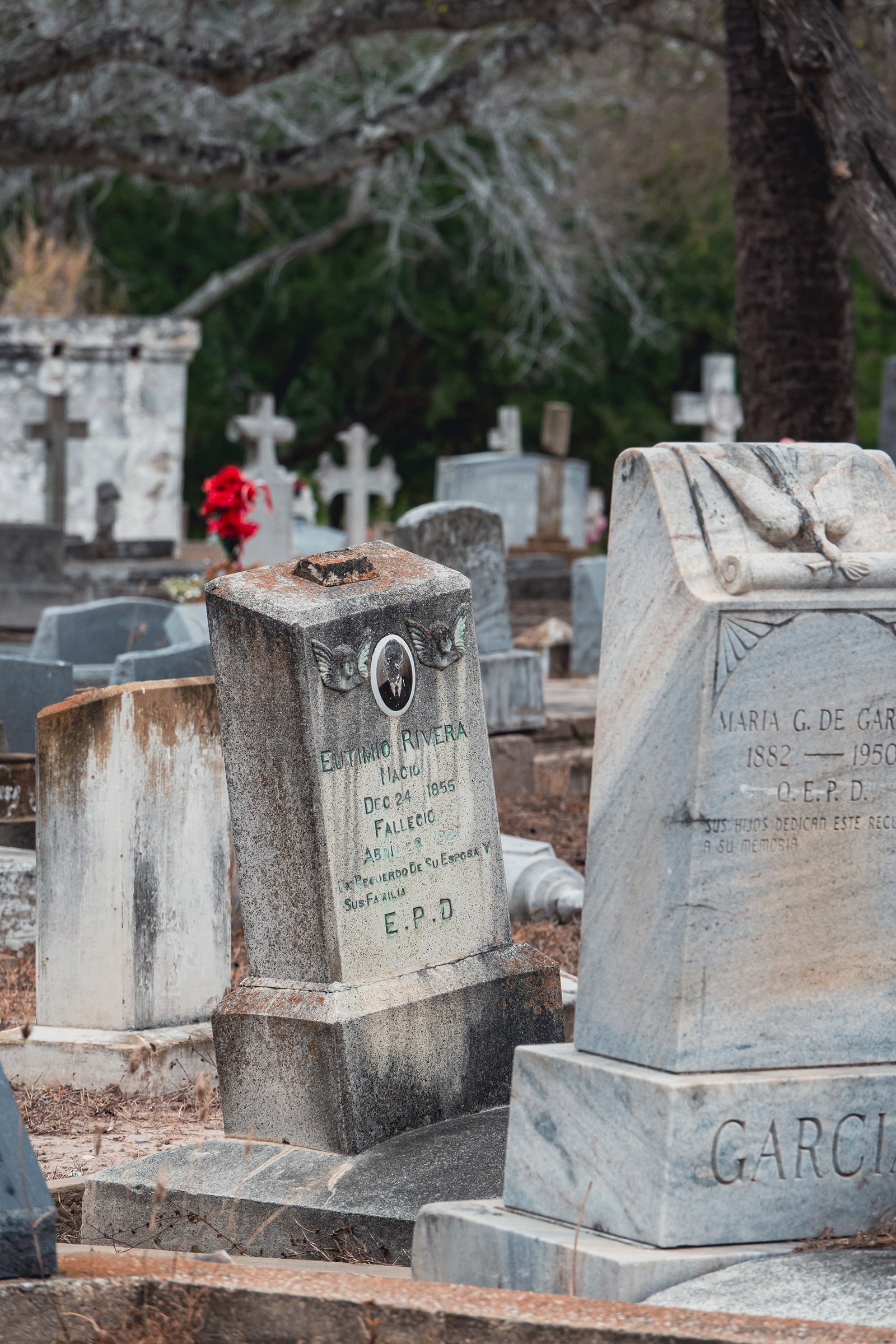
For history enthusiasts, photographers, or anyone drawn to borderland stories, Brownsville’s Old City Cemetery delivers more than graves. It offers a historic archive of resilience, diversity, and the enduring spirit of a Texas frontier town where cultures converged and people endured. A few hours spent here can make a profound connection with the Rio Grande Valley’s layered soul.