Rising dramatically at the intersection of Broadway and Rosenberg Avenue in the heart of Galveston, the Texas Heroes Monument stands as a soaring granite-and-bronze tribute to the courage that forged a republic. At 74 feet tall, this Beaux-Arts masterpiece draws travelers and history buffs alike, inviting them to pause amid the island’s palm-lined streets and reflect on the epic struggle for Texas’s independence. Commissioned by one man’s generous vision, it remains Galveston’s most iconic public sculpture—and a must-see landmark for anyone exploring the Gulf Coast’s rich history.
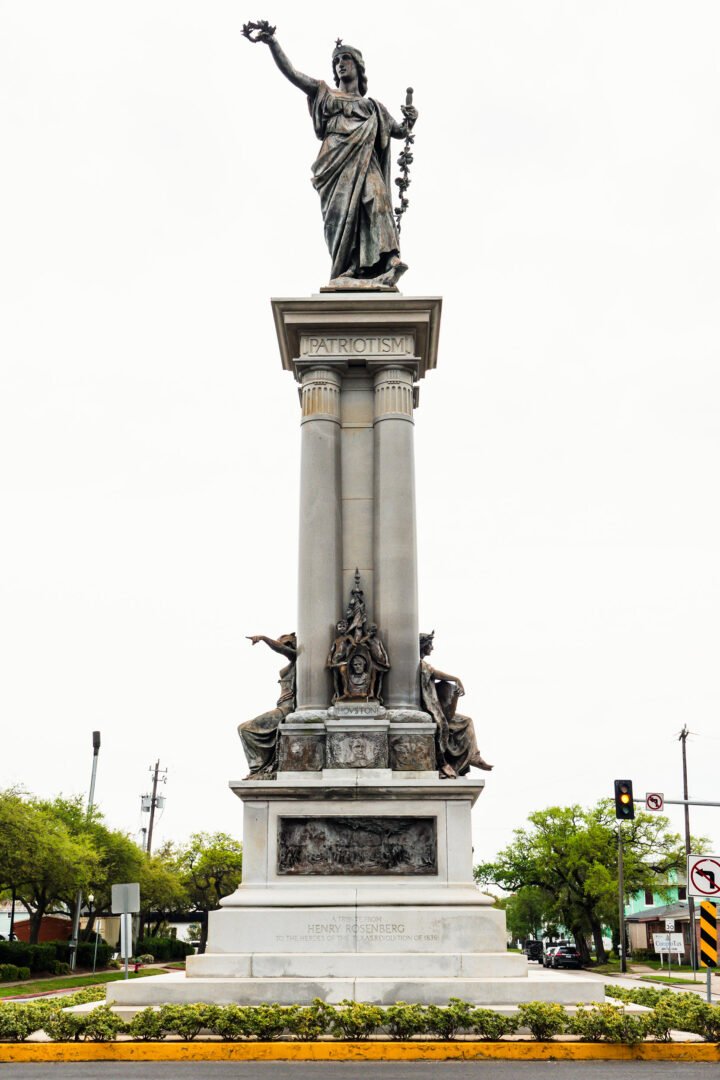
The monument’s story begins with Henry Rosenberg, a Swiss-born immigrant who arrived in Galveston in the 1840s and built a thriving banking empire. Upon his passing in 1893, Rosenberg became one of the city’s most significant philanthropists by gifting the bulk of his estate to be used for local public works. An orphanage, library, church, YMCA, nursing home, drinking fountains, and other projects were constructed through his generosity. In his will, he also earmarked $50,000 “for the erection of an appropriate monument in the city of Galveston to the memory of the heroes of the Texas revolution of 1836.” His executor, Major A.J. Walker, oversaw every detail, ensuring the bequest honored not just local pride but the entire Republic of Texas.
It was sculptor Louis Amateis who brought Rosenberg’s dream to life. Born in Turin, Italy, in 1855, Amateis trained at the Academy of Fine Arts before immigrating to the United States in 1883. He settled in Washington, D.C., where he founded the School of Architecture and Fine Arts at what is now George Washington University. A master of marble and bronze, Amateis was already nationally recognized when he won the commission. He designed the monument’s intricate bronze elements in Washington but had them cast in Rome, submitting every group, bas-relief, and figure to the College of Sculptors for approval—an Old World seal of artistic excellence. The granite sections were carved on-site by Amateis in Galveston from massive blocks quarried in Concord, New Hampshire (the same stone used for the Library of Congress). The entire project cost exactly the $50,000 bequeathed, a testament to careful stewardship.
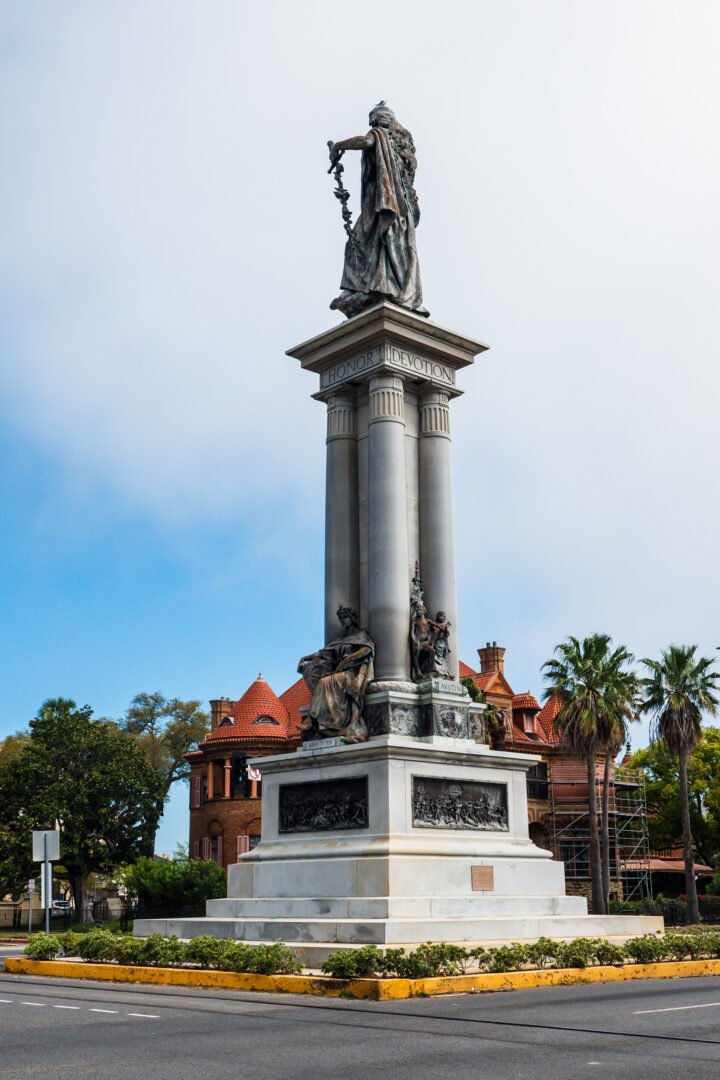
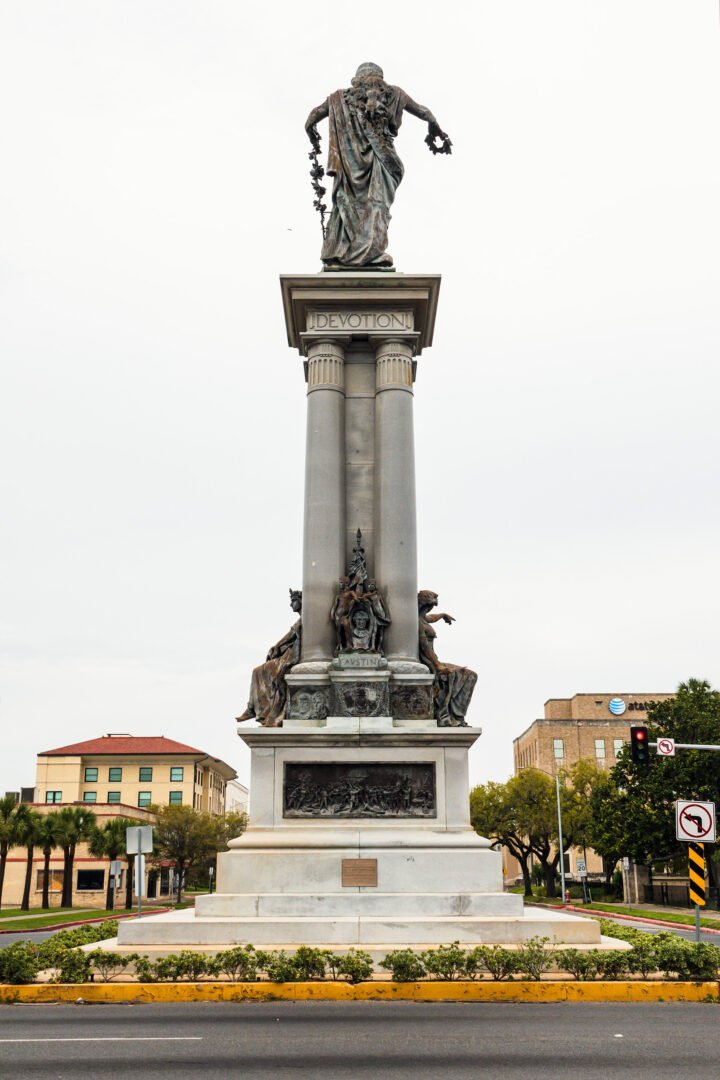
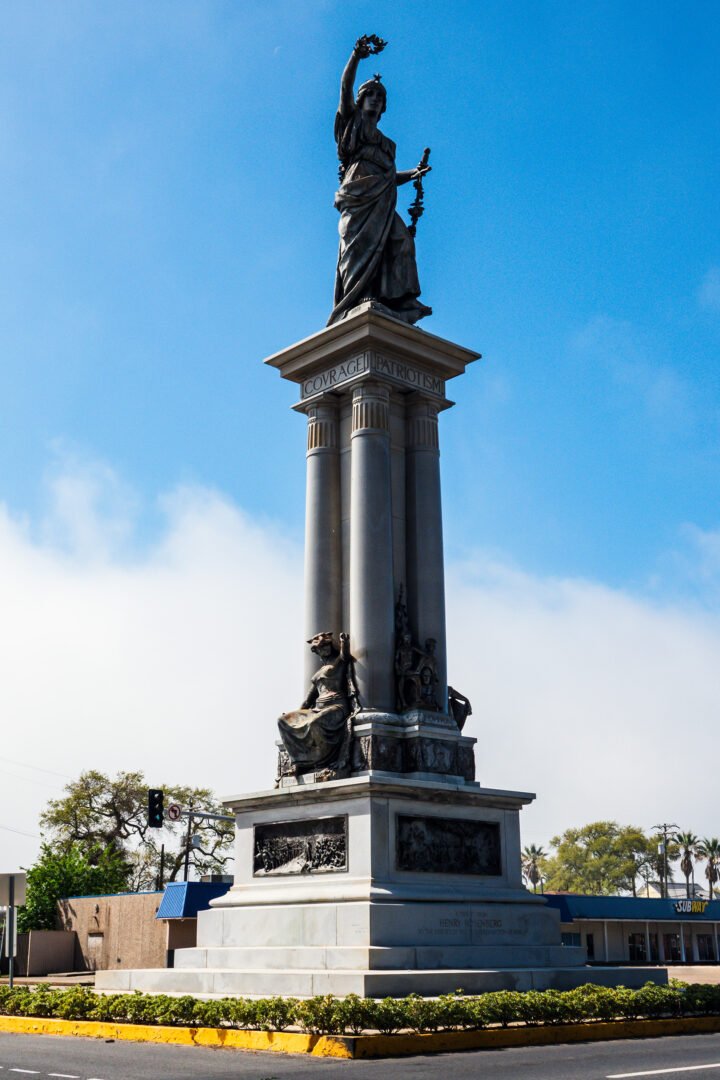
 The result is breathtaking. A single 12-ton granite block forms four 50-foot columns that rise from a 34-foot-square base. Atop them, inscribed in bold letters, are the virtues that defined the Texas fighters: Patriotism (north), Courage (east), Devotion (south), and Honor (west). Crowning this landmark is the 22-foot bronze figure of Lady Victory—the second-tallest bronze statue in America at the time it was unveiled. She gazes north across Texas toward the San Jacinto battlefield, her right hand extending a laurel crown to the heroes while her left grips a sheathed sword entwined with roses, symbolizing peace born of sacrifice.
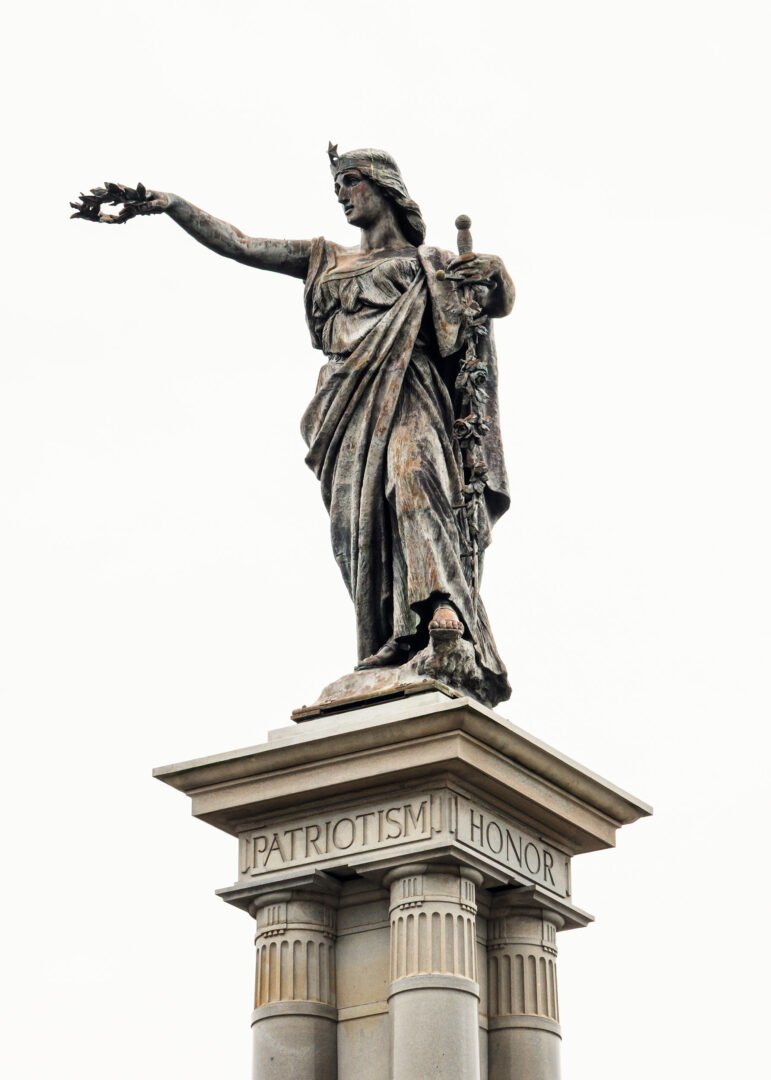
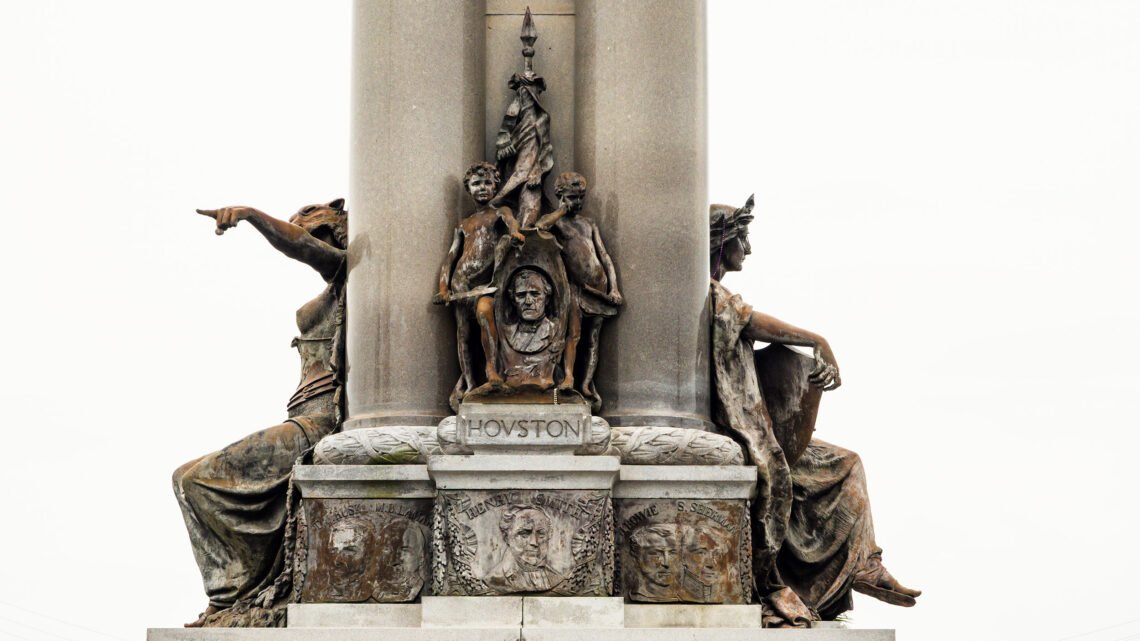
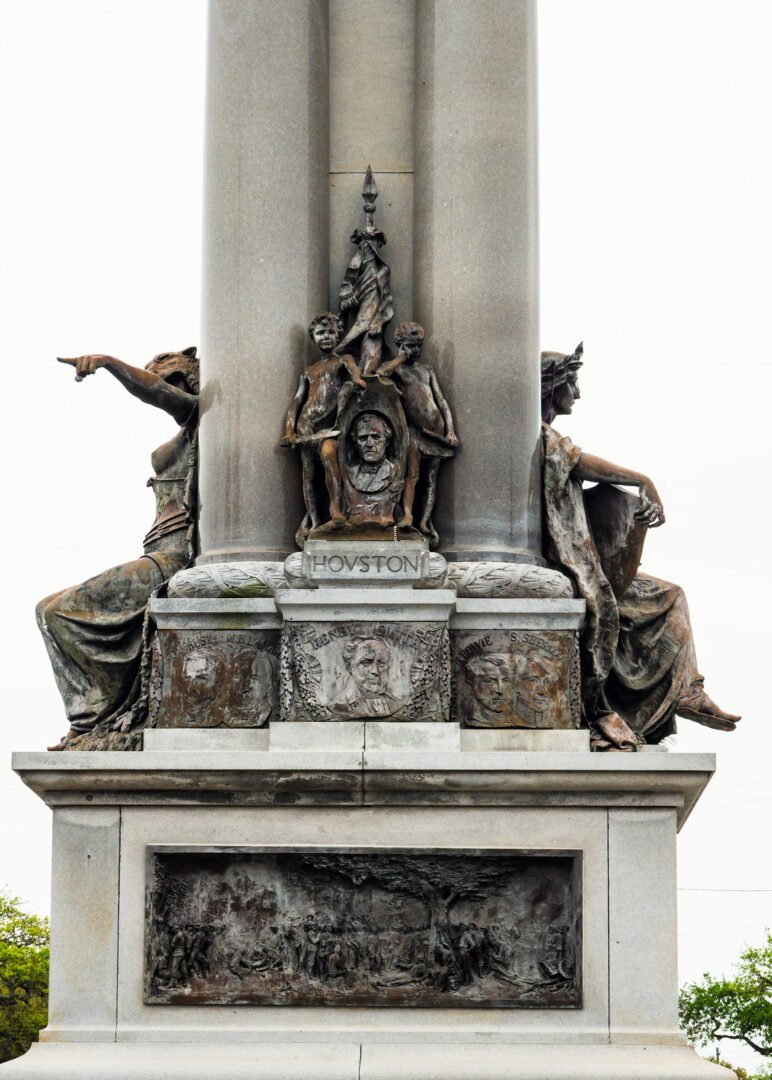
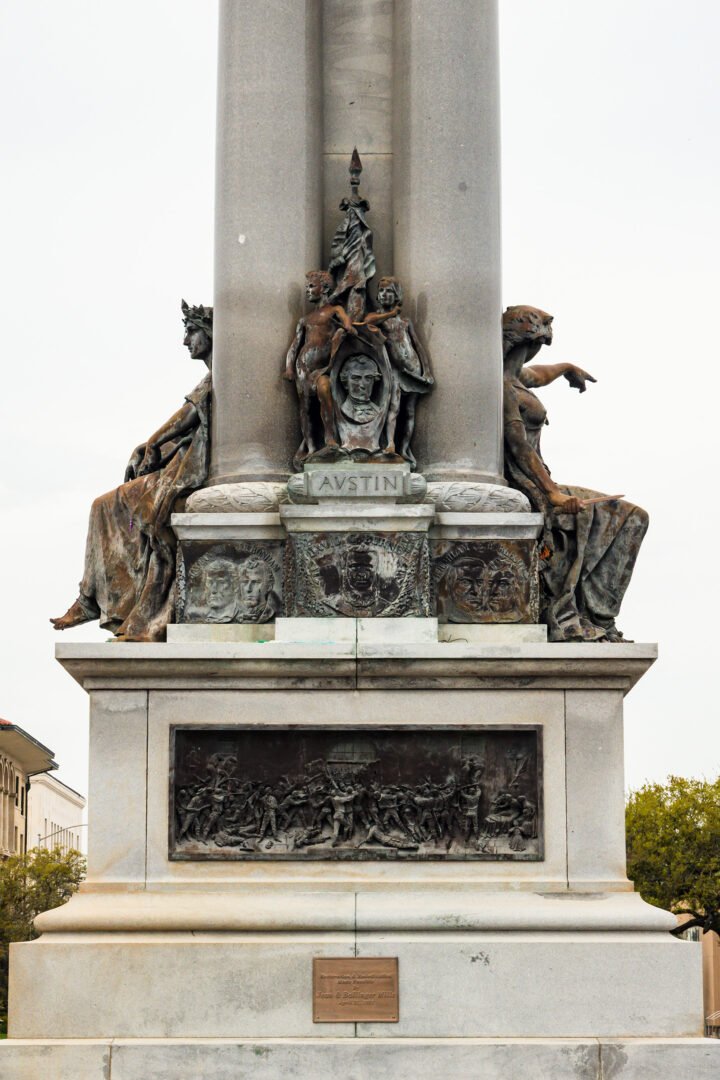
The base of each column is decorated with bronze allegorical figures and medallions that honor the heroes who fought for Texas independence.
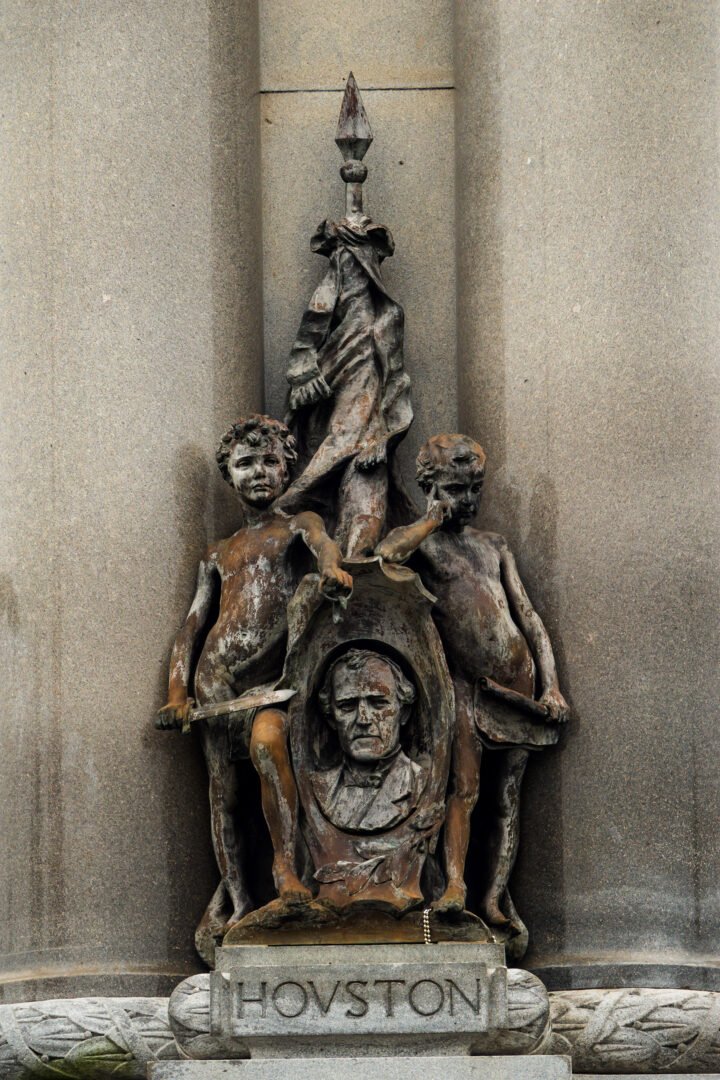
On the north (Patriotism) side, a bronze medallion of General Sam Houston is flanked by bronze figures representing war and peace. Beneath him are busts of Thomas J. Rusk, Mirabeau B Lamar, Henry Smith, James Bowie, and Sidney Sherman.
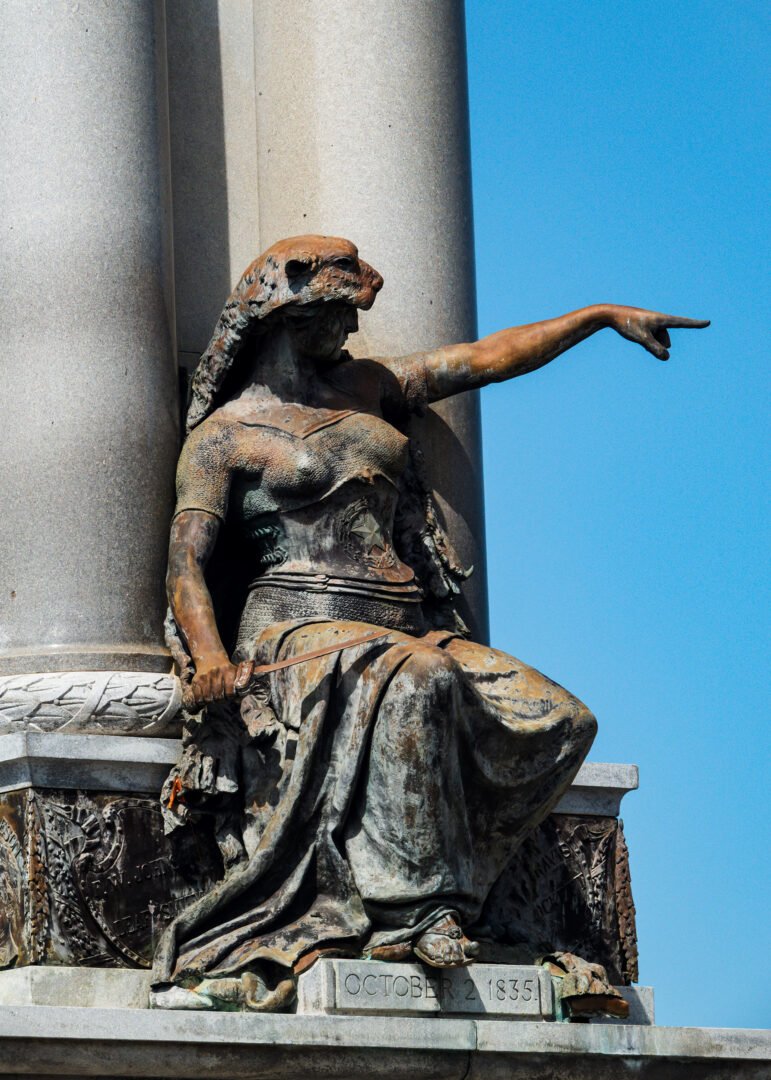
The east (Courage) column features Lady Defiance—an armored female figure unsheathing her sword and ordering Mexican forces out of Texas. She wears a lioness pelt over her head and shoulders and a Lone Star on her chest. The date October 2, 1835, is placed directly beneath her feet to mark the Battle of Gonzales—the first armed clash of the Texas Revolution and the symbolic spark that ignited the fight for independence from Mexico. Engraved in bronze beside her are the names of heroes without portraits: Francis W. Johnson, Erastus “Deaf” Smith, William B. Travis, and David Crocket.
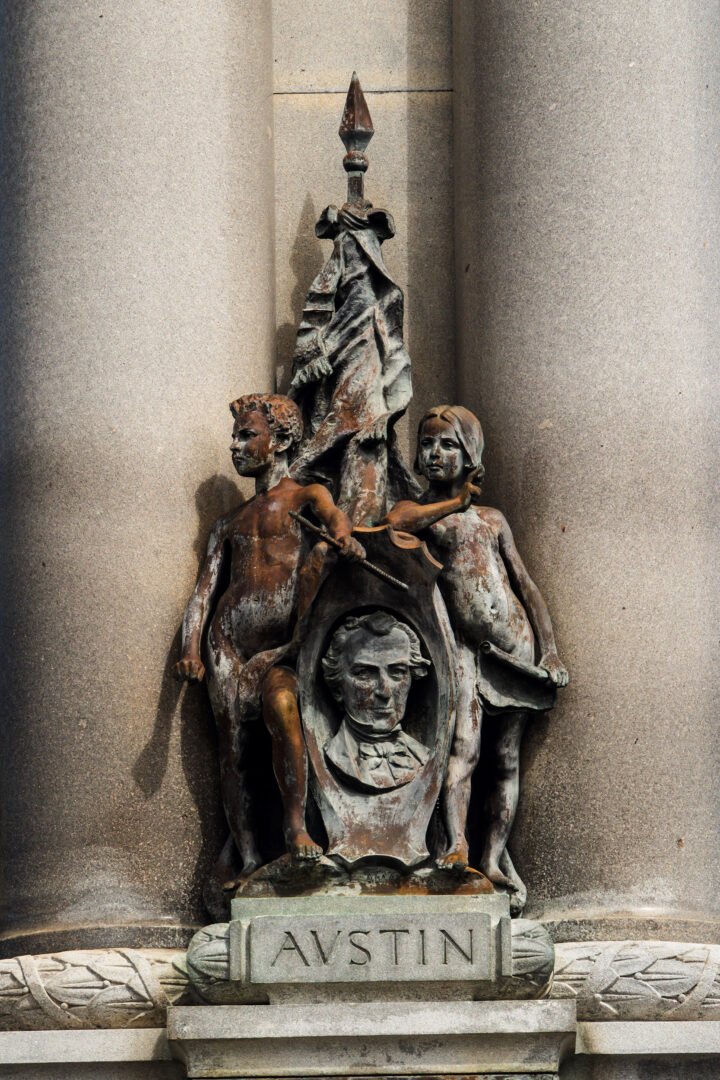
The south (Devotion) side displays a medallion of Stephen F. Austin, “Father of Texas,” surrounded by allegorical figures for war and diplomacy with busts of James W. Fannin, James Butler Bonham, David G. Burnet, Benjamin R. Milam, and Edward Burleson below.
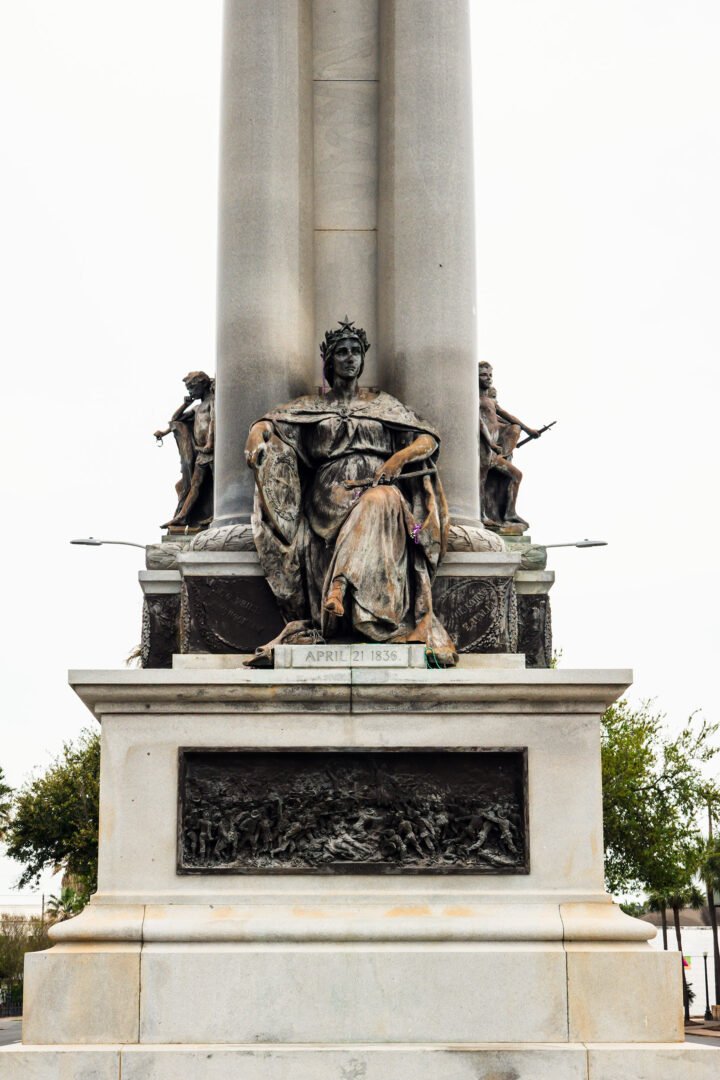
The west (Honor) column shows Lady Peace, seated with a sheathed sword across her lap, resting one arm on the coat of arms of Texas, crowned with laurel, and wearing the Lone Star on her head. She is meant to embody the calm, honorable resolution that followed the fighting. Inscribed at her feet is the date April 21, 1836, for the Battle of San Jacinto—the decisive and final battle of the Texas Revolution. The names of James C. Neill, George W. Hockley, Henry Karnes, and Lorenzo de Zavala are engraved in bronze at her sides.
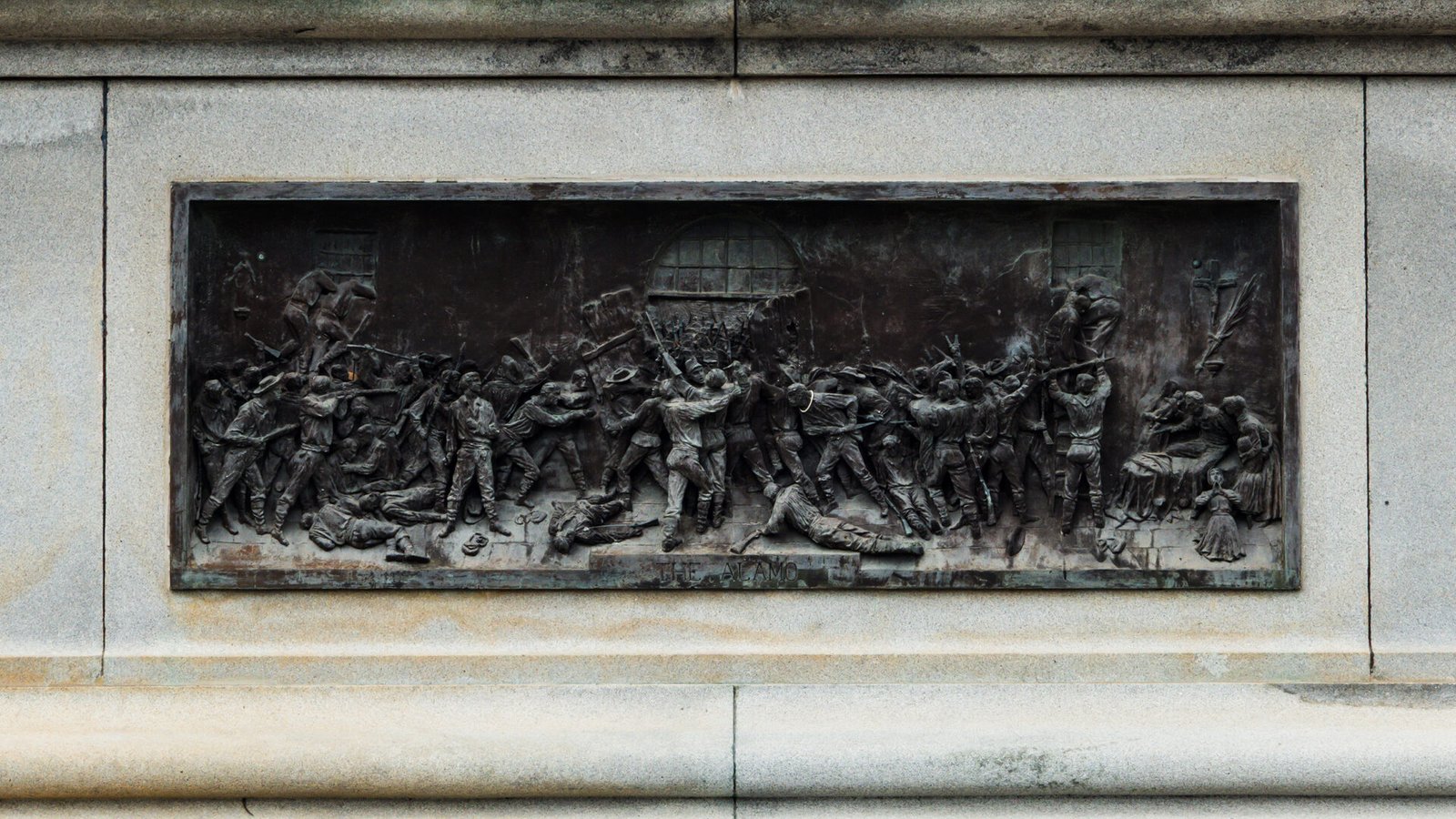
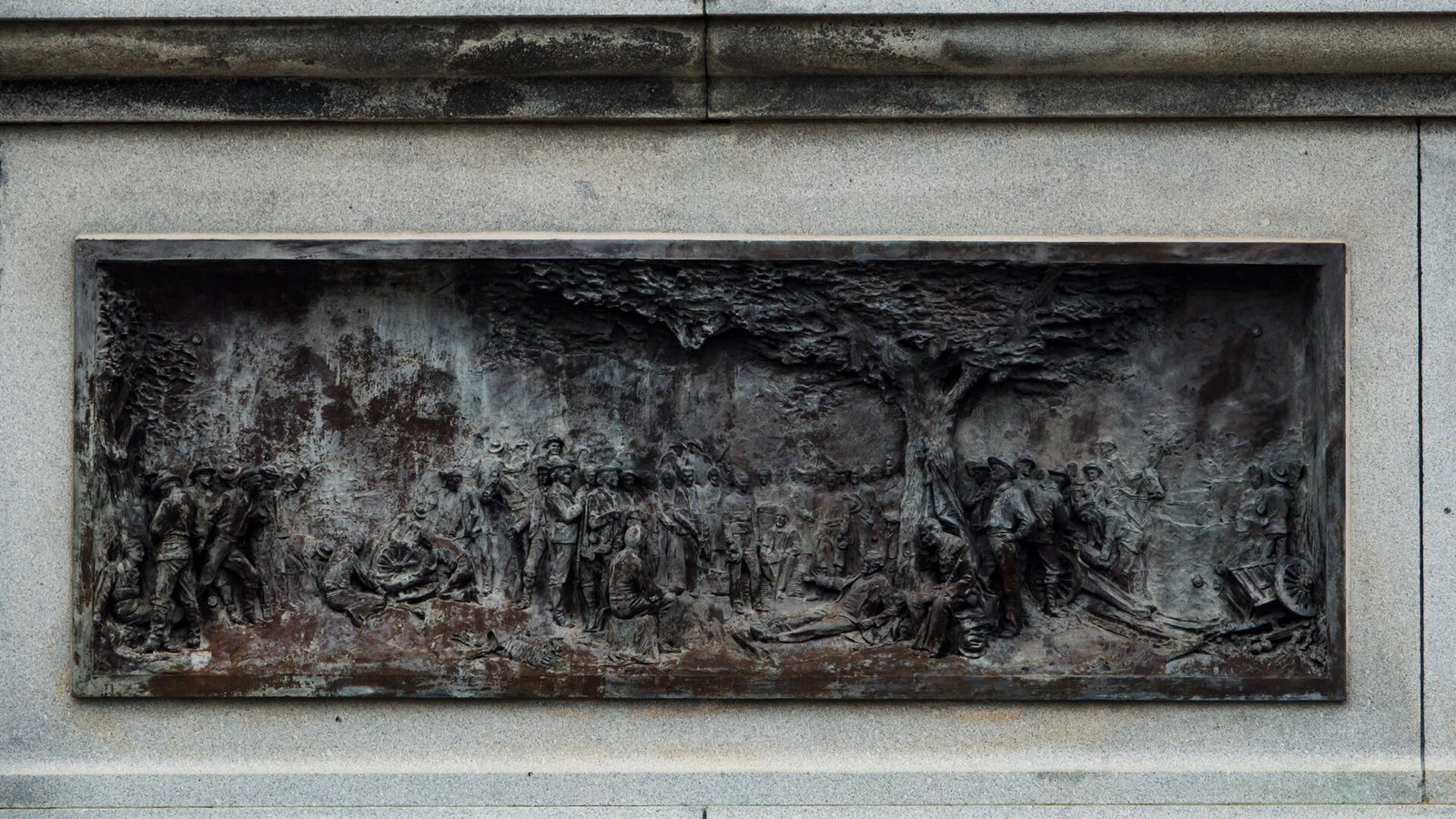
The final section of the monument, the sub-base, features four massive bronze bas-reliefs (each nine feet long and three feet tall) that illustrate the key dramatic moments of the Texas Revolution of 1836. The southern scene depicts “The Defense of the Alamo,” with Mexican troops storming the shattered mission gates while a wounded Jim Bowie fights from his cot and women shield children in the chaos. The eastern scene shows “The Massacre at Goliad,” where unarmed Texan prisoners were slaughtered on March 27, 1836. On the northern side is “The charge of Sam Houston’s troops that won the Battle of San Jacinto” which was the final battle of the war. And facing the west is “Santa Anna before General Houston at San Jacinto” where Santa Anna surrenders to the wounded Houston under a live oak tree. At the very bottom, facing north, a simple inscription reads: “A Tribute from Henry Rosenberg to the Heroes of the Texas Revolution of 1836.”
Unveiled on April 21, 1900—San Jacinto Day—before an estimated 10,000 cheering spectators, the Texas Heroes Monument became an instant Galveston landmark. Courts closed, schoolchildren paraded with flags, and a 17-gun salute echoed across the island. It embodied the City Beautiful Movement’s ideals of grand civic art inspiring patriotism. Less than five months later, the devastating Galveston Hurricane struck on September 8th. Sustained winds estimated at 130–145 mph and a massive storm surge destroyed or severely damaged roughly one-third of Galveston’s buildings, killed an estimated 6,000–8,000 people, and left the island in ruins. However, the 22-foot Lady Victory proved remarkably resilient and the granite pillars endured intact. The monument became a symbol of endurance in the devastated city as Galvestonians, already reeling from the loss of life and property, rallied to rebuild.
For today’s visitors, the Texas Heroes Monument offers more than just a display of bronze and stone. Stand at its base and you can feel the weight of the history it represents. Lady Victory’s outstretched hand seems to point not just to a distant battlefield but to the enduring spirit of resilience that defines Texas. Whether you’re a history enthusiast tracing the revolution’s footsteps or simply a traveler seeking Galveston’s sandy shore, this towering tribute rewards every moment spent in its shadow. In a city known for beaches and Victorian charm, it reminds us that some monuments endure because they honor the ordinary heroes who changed the course of nations. And it is a fitting legacy for a man who believed civic beauty and historical memory strengthened communities.