Step inside the USS Cavalla (SS-244) at the Galveston Naval Museum and enter a world of steel, silence, and extraordinary courage. Located at Seawolf Park on Pelican Island, this Gato-class submarine stands as a monument to the U.S. Navy and the men who served beneath the seas. Stand on top of the 312-foot hull that once prowled the Pacific depths. Walk through the interior from bow to stern and imagine what sailors experienced over eighty years ago. Not just a relic, the Cavalla is a portal to the “Silent Service” of World War II. It is also one of the few intact fleet submarines open for self-guided exploration anywhere in the United States.
The Cavalla’s long and distinguished history began in 1943 at the shipyards of Groton, Connecticut where she was designed and built by Electric Boat Company. Launched on November 14, 1943, and commissioned on February 29, 1944, the submarine departed New London for Pearl Harbor to join the war in the Pacific. On her very first patrol in June 1944, Cavalla shadowed a massive Japanese task force en route to the Marianas. She relayed critical intelligence that helped set the stage for the Battle of the Philippine Sea. Then, on June 19, she made a decisive strike in that battle. Firing a spread of torpedoes, Cavalla sank the aircraft carrier Shōkaku—one of the six Japanese carriers that had attacked Pearl Harbor nearly three years earlier. This earned her the nickname “Avenger of Pearl Harbor.” Over six war patrols, she sank more than 34,000 tons of enemy shipping, including the destroyer Shimotsuki and several merchant vessels. She earned a Presidential Unit Citation for that first patrol and four battle stars. In September 1945, she steamed into Tokyo Bay to witness the Japanese surrender aboard the USS Missouri.
After the war, Cavalla was decommissioned in 1946 and placed in reserve. She returned to service in 1951, first as a conventional fleet boat and later converted into a hunter-killer submarine (SSK-244) for testing advanced sonar. Reclassified as an auxiliary submarine (AGSS-244) in 1963, she continued experimental work until her final decommissioning in December 1969. Rather than face the scrapyard, she received a nobler fate. On January 21, 1971, the U.S. Navy transferred ownership to the Texas Submarine Veterans of World War II. The veterans berthed her permanently at Seawolf Park in Galveston as a living memorial to the USS Seawolf (SS-197), a submarine lost with all 83 hands in the Pacific in 1944. The park itself took its name from that tragic vessel, leading many visitors to mistakenly call the Cavalla the “Seawolf.” Over the decades, dedicated volunteers and the Galveston Naval Museum have restored her extensively. In 2008 she was added to the National Register of Historic Places, preserving her as one of the most authentic World War II submarines on public display.
A visit to the Cavalla starts by entering Seawolf Park, which costs $10 per vehicle. After parking, walk to the Galveston Naval Museum to purchase your ticket ($14 for adults, $10 for children). Once inside, your ticket grants access to both the Cavalla and her surface companion, the destroyer escort USS Stewart. Together, they have been nicknamed “Predator and Protector.” Within the museum grounds, you will also find the sail of the USS Tautog, the conning tower of the USS Carp, displays about the USS Seawolf, and other American Naval artifacts.
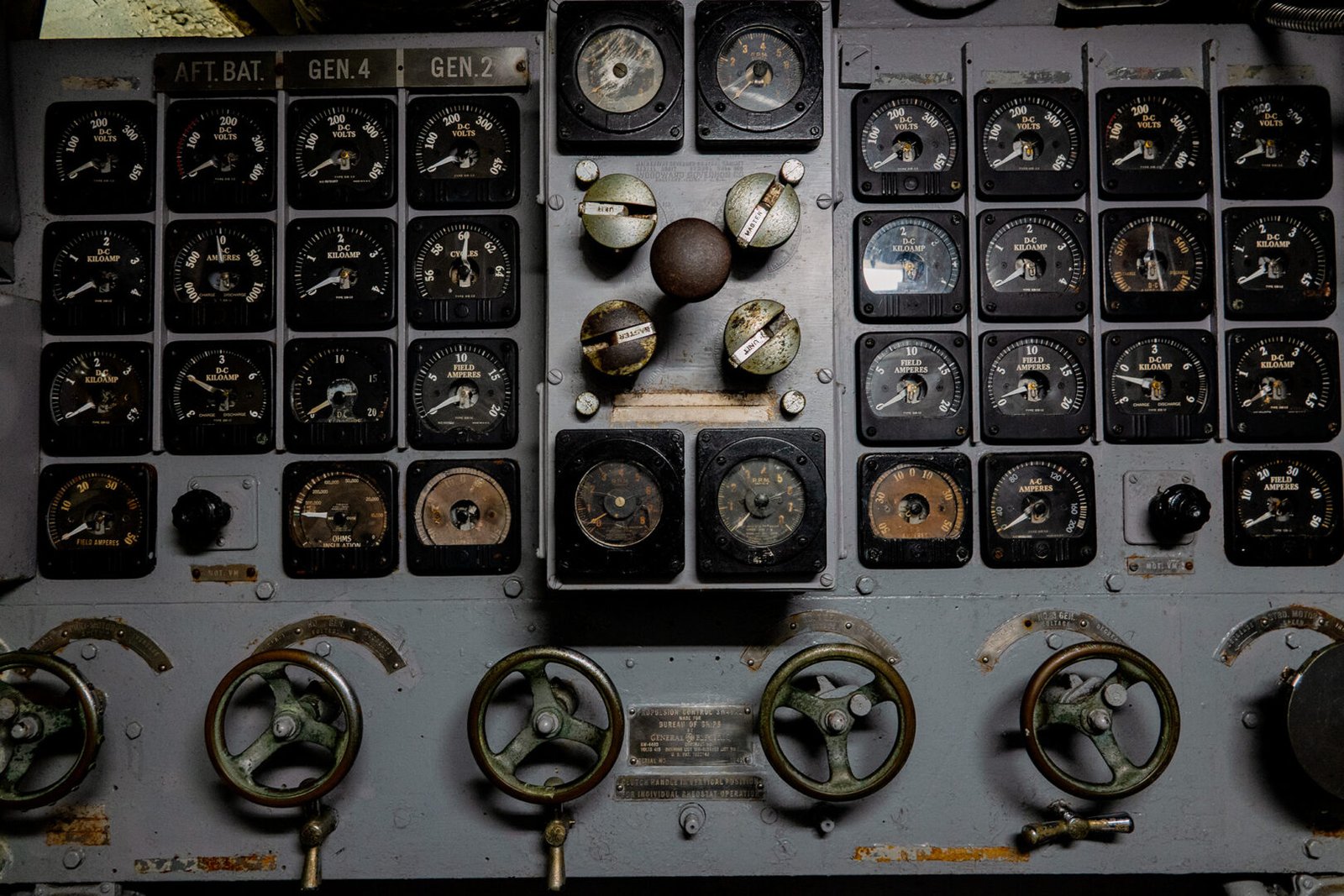
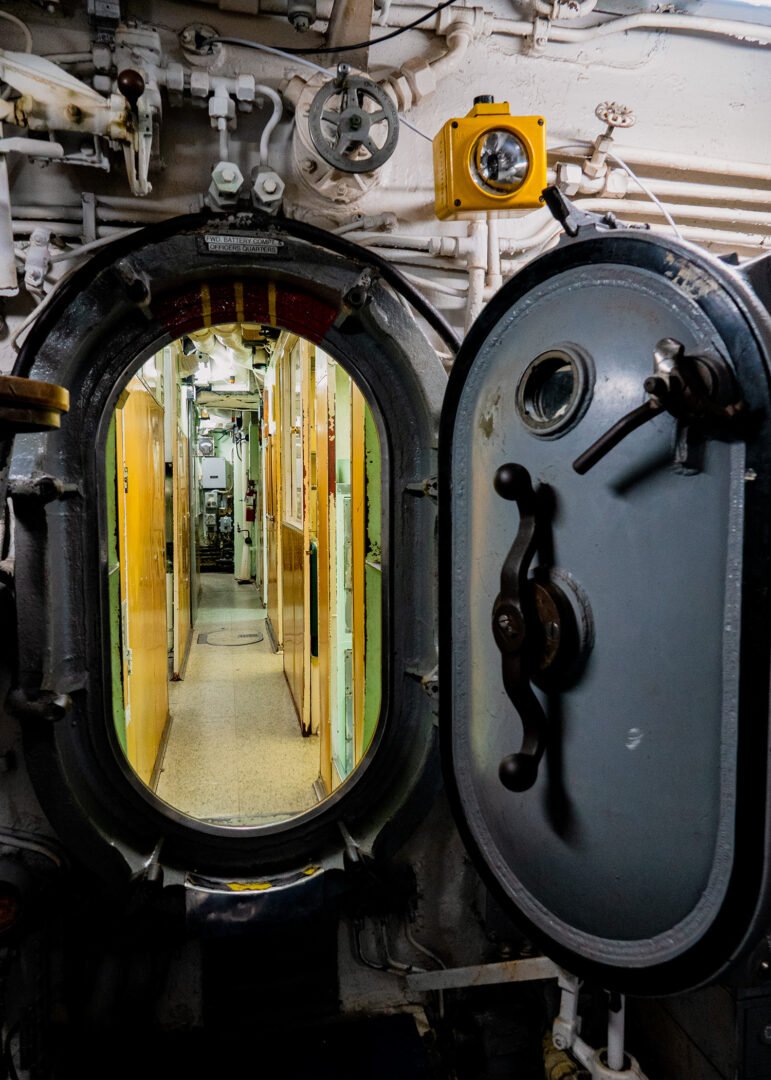
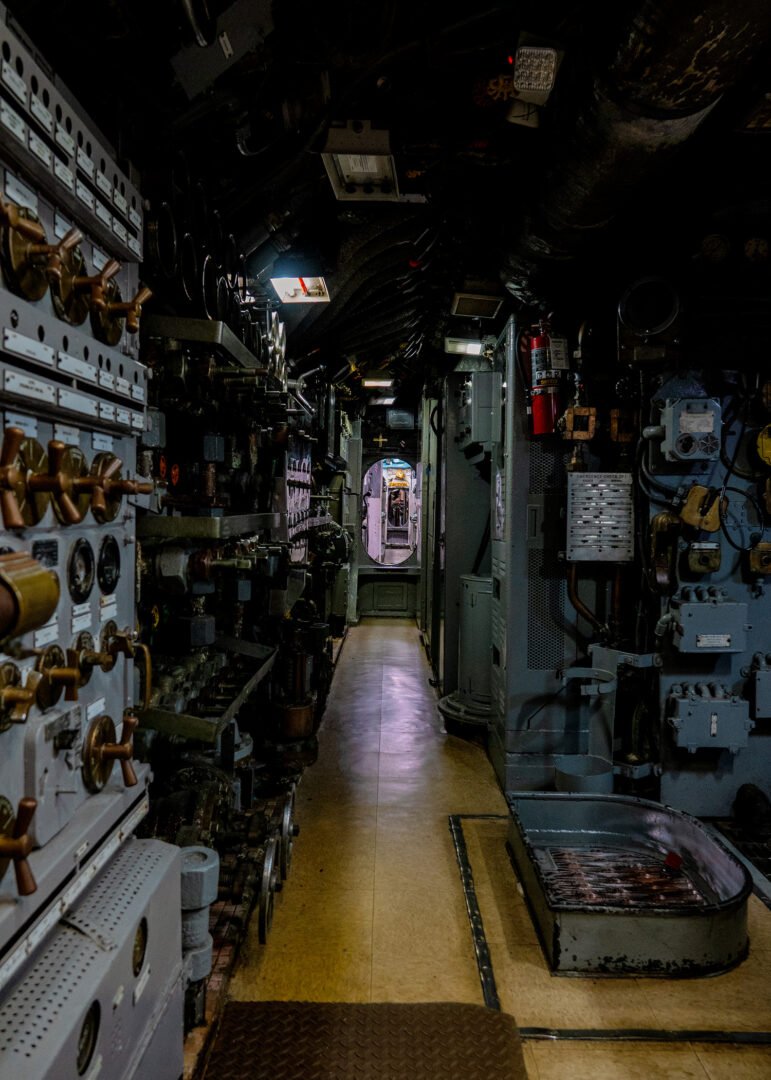
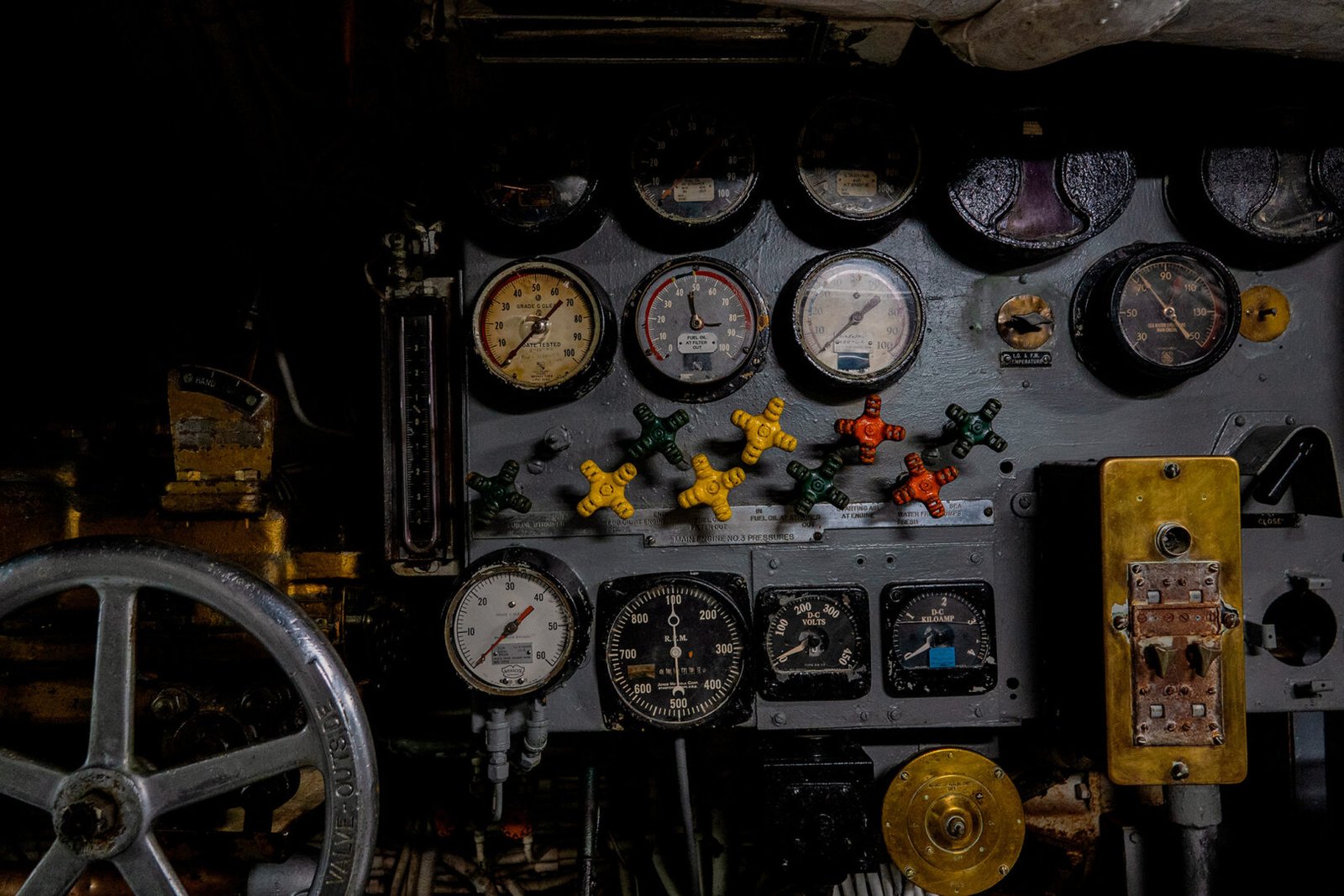
When you board the boat via a gangway, make your way across the hull and descend through the hatch into the interior. The moment you step inside, the 1940s seem to close all around you. Passageways are shoulder-width at best, forcing single-file movement past a labyrinth of valves, pipes, and gauges. Keep in mind that every dial once tracked depth, pressure, or battery charge and every lever once changed engine speeds or controlled life-support systems in a steel tube 300 feet beneath the waves.
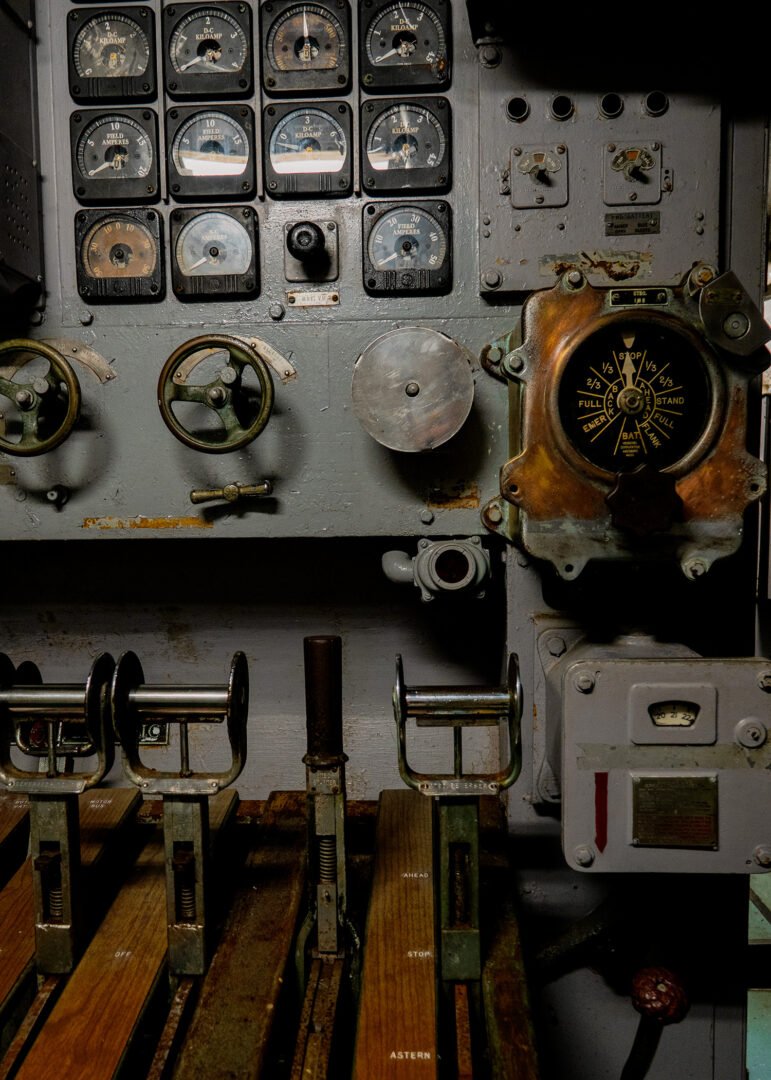
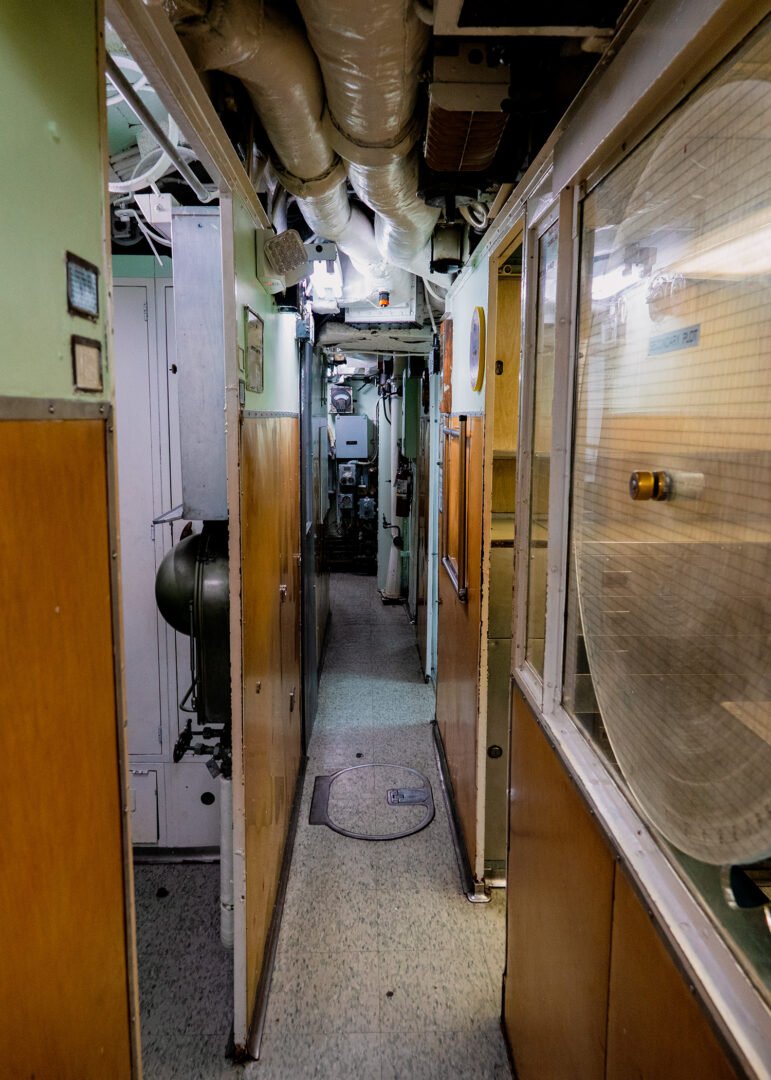
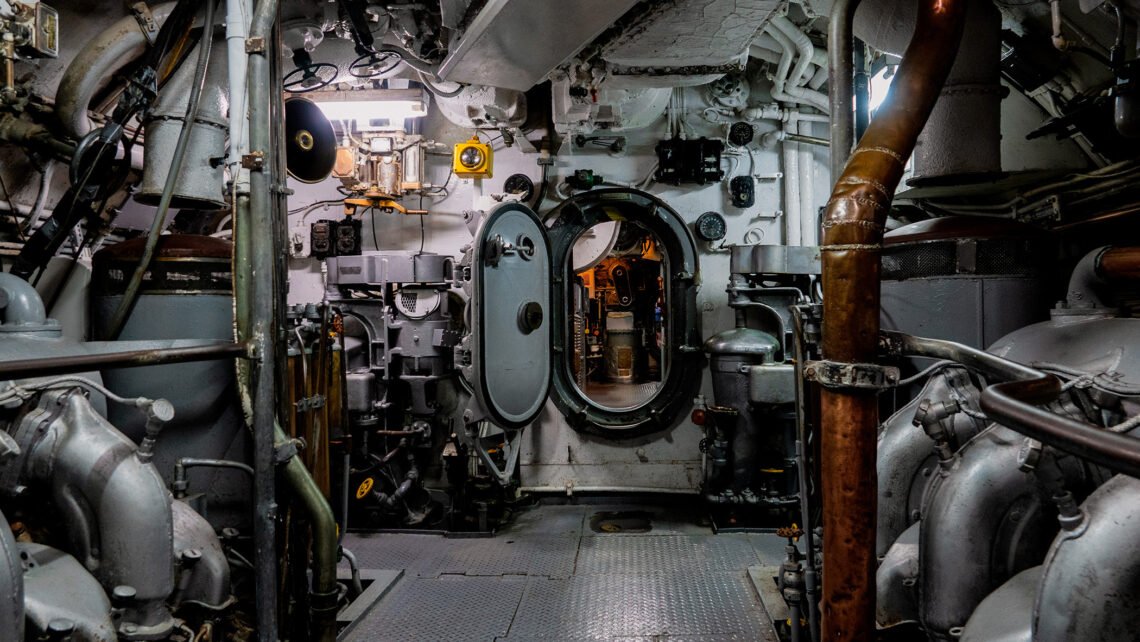
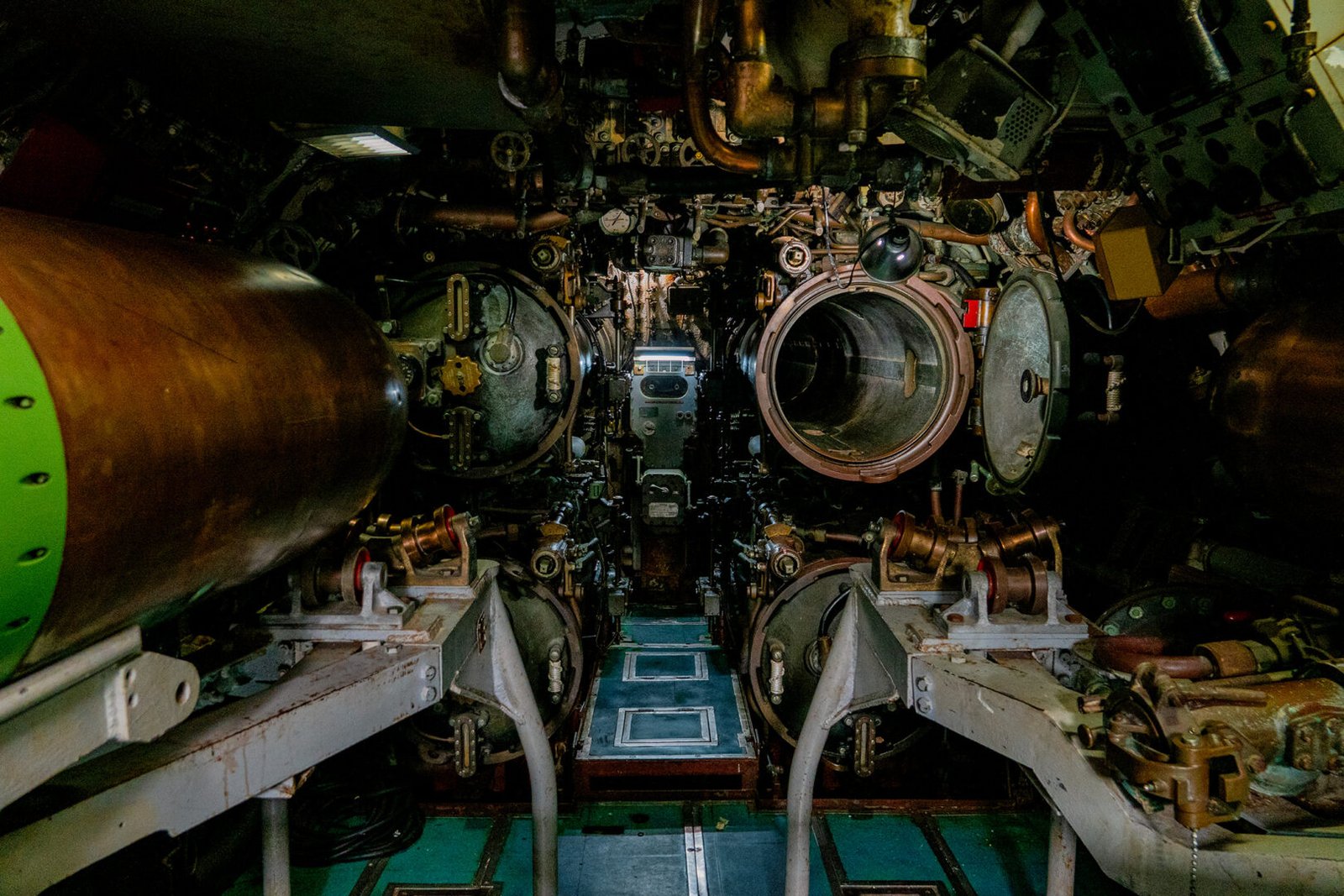
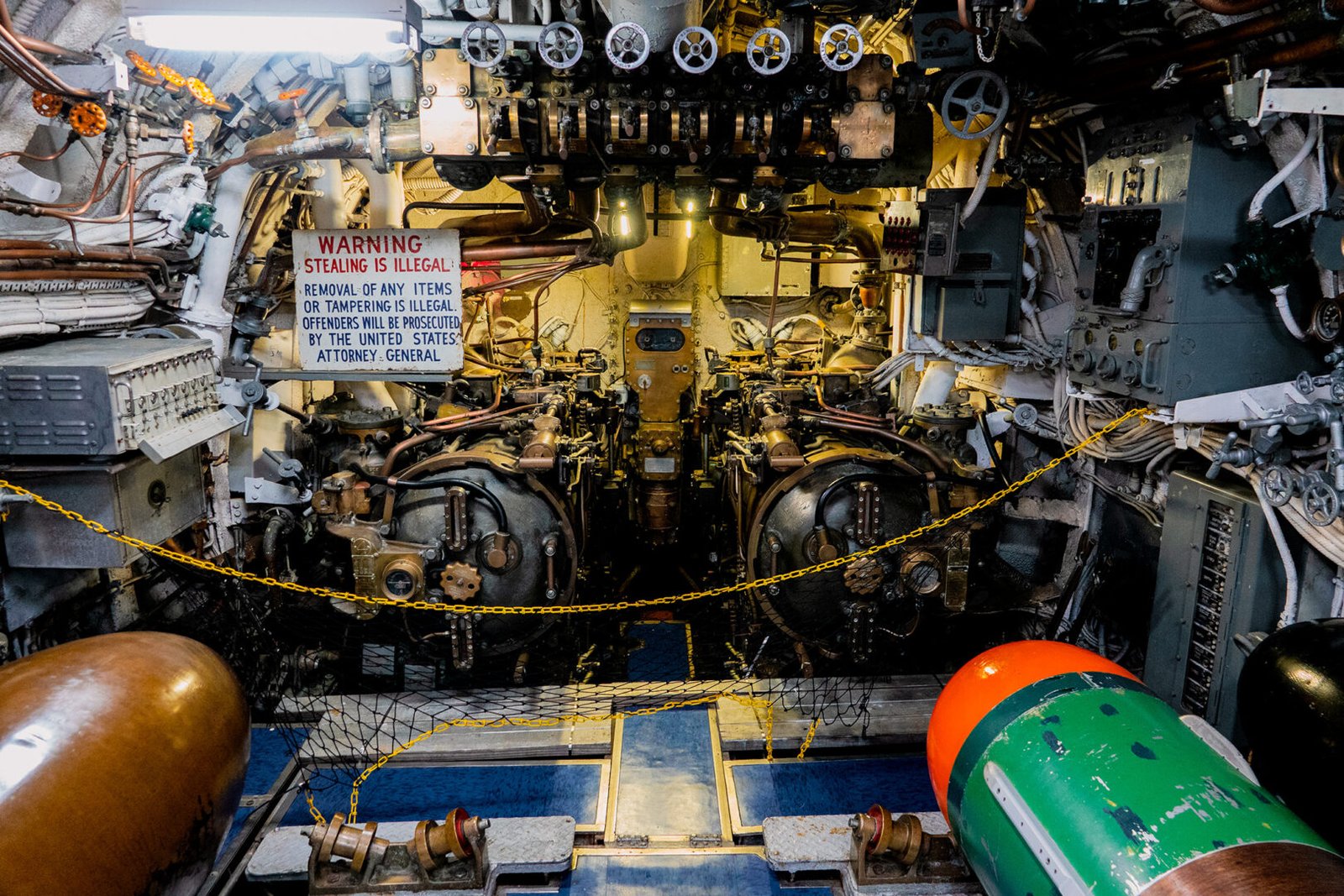
On the self-guided tour, visitors get to walk through and experience every section of the submarine. The after compartments contain the diesel engines and electric motors that propelled Cavalla through 90,000 miles of ocean. Crew quarters house bunks stacked three high in claustrophobic tiers, with each sailor allotted a space barely wider than a coffin. Eighty men lived, worked, and slept in shifts for weeks at a time, sharing one shower and a galley that somehow produced hot meals from a tiny electric stove and pressure cookers. In the control room, the submarine’s nerve center, the periscope wells rise through the deck. The helmsman’s wheels, depth gauges, and trim tanks evoke the tension of silent running. A refitted officers’ wardroom nearby once doubled as a plotting space for tracking targets. And in the forward torpedo room, six massive tubes stand ready to launch the submarine’s primary weapons. Markings on the bulkheads still show where spare torpedoes were stowed like lethal sardines.
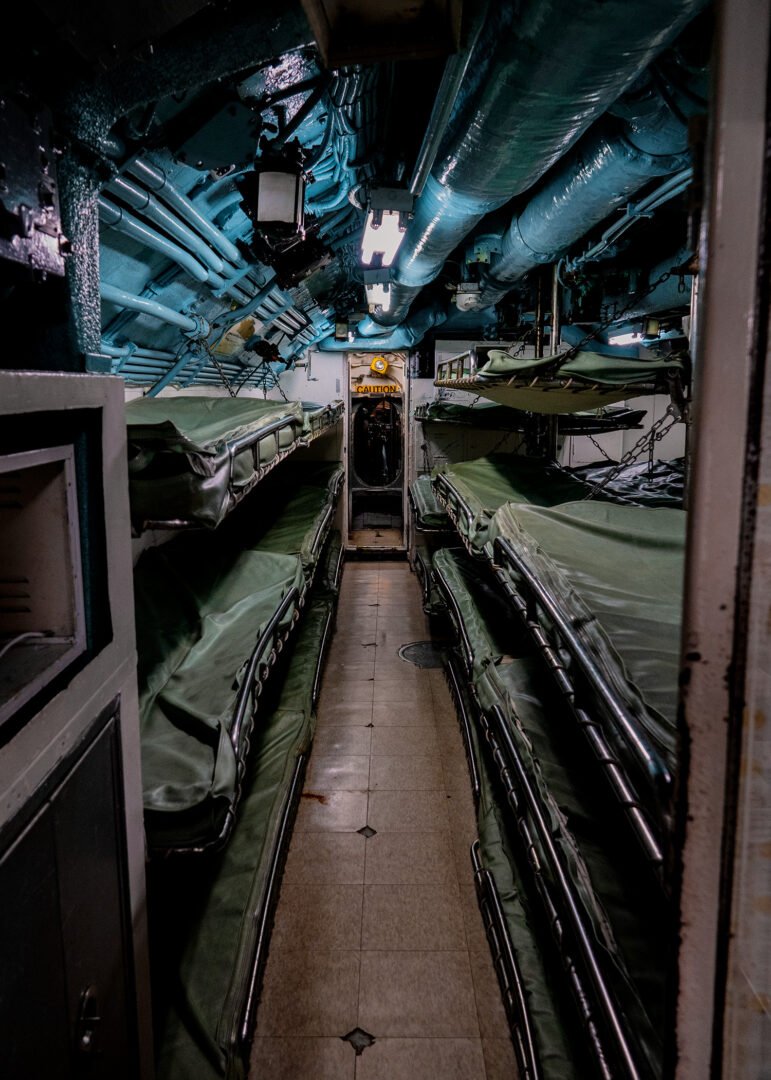
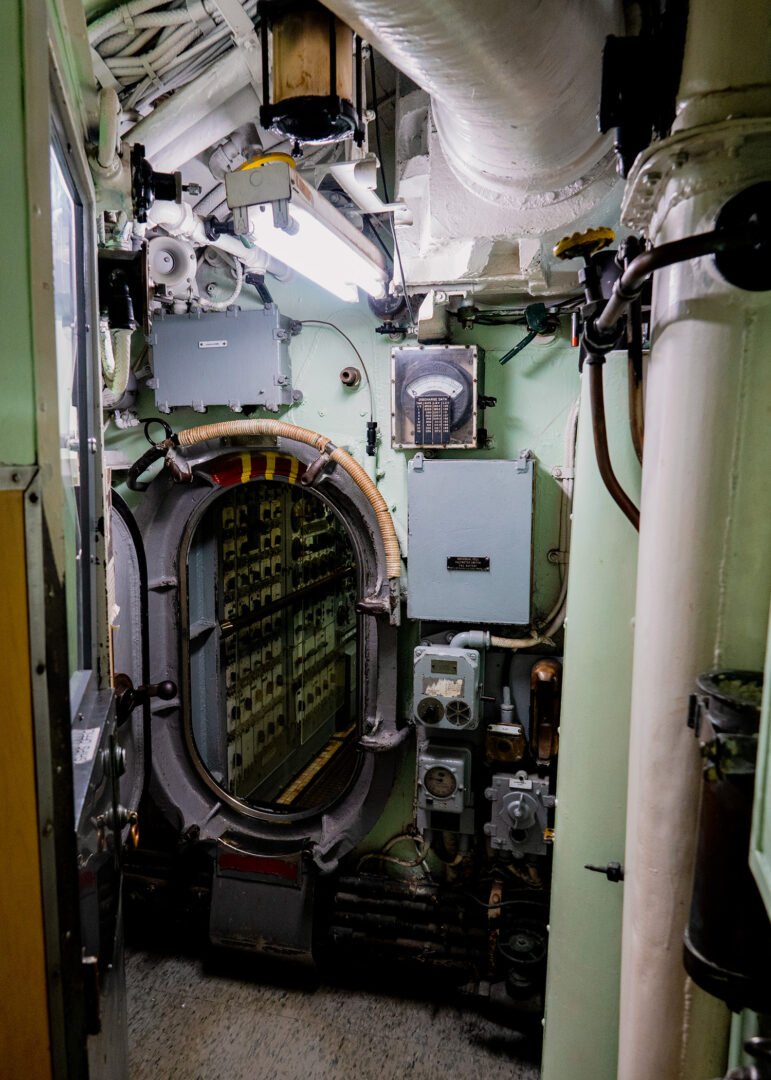
Unlike many museum subs where areas are roped off, the Cavalla invites deeper exploration. You can stand in the shower, peer into the pantry, and imagine the cook balancing pots while the boat rolled in heavy seas. Informational plaques and artifacts—uniform patches, a replica battle flag, personal effects—bring the crew’s stories alive. Self-guided audio or volunteer docents occasionally add color, recounting how the “Lucky Lady” survived depth-charge attacks and how 21-inch Mark 14 torpedoes were loaded by hand in rolling seas.
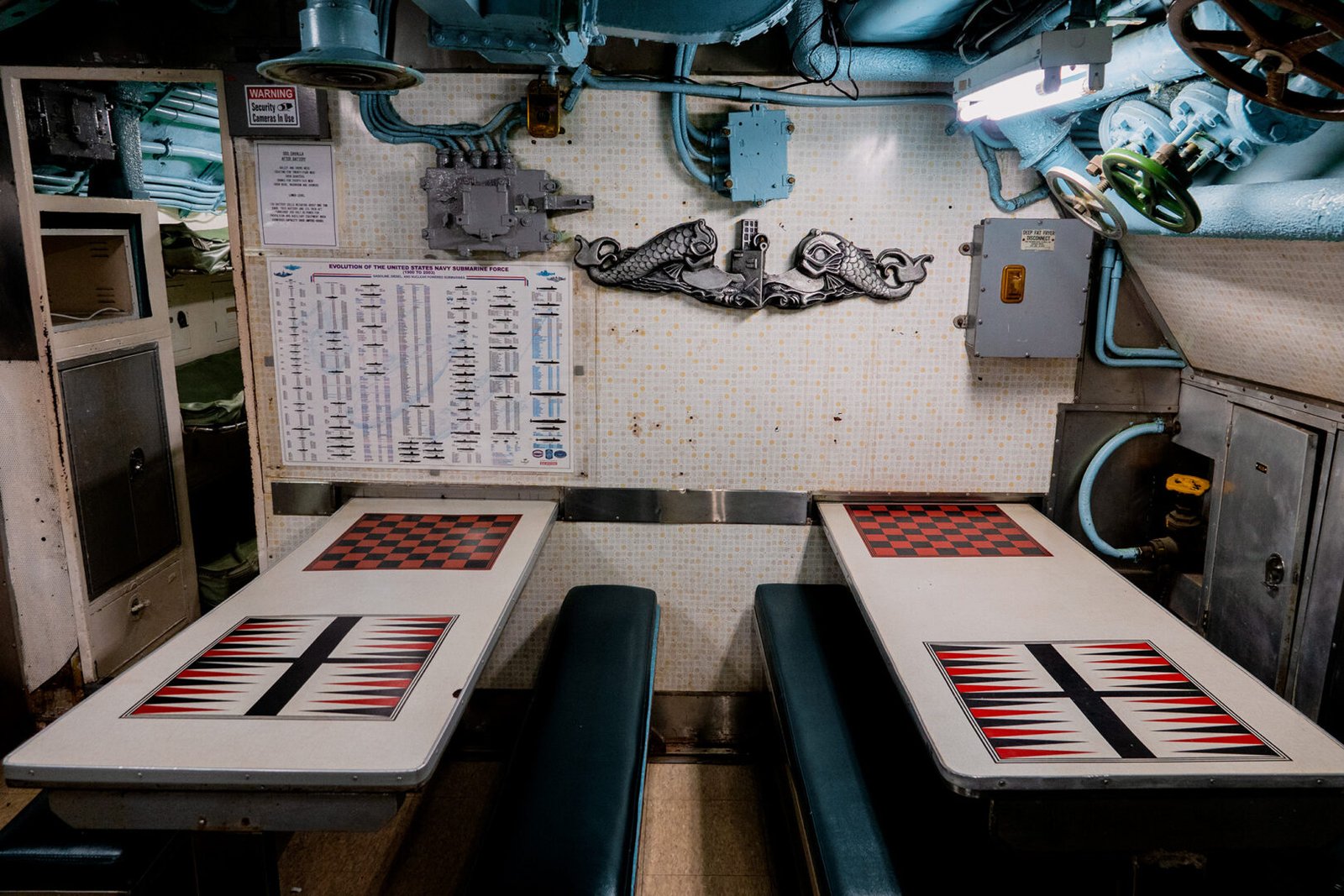
A tour of the Cavalla is intimate and humbling. The air inside feels cooler and damper, the lighting dimmer, the space tighter than a modern visitor might expect. Emerging back onto the deck, the Gulf breeze and distant cry of seagulls feel like luxuries. For anyone drawn to military history, naval engineering, or simply the thrill of stepping into the past, the USS Cavalla delivers an unforgettable journey. She is more than a museum ship. She is a testament to ingenuity, endurance, and the quiet heroes who patrolled the deep.