
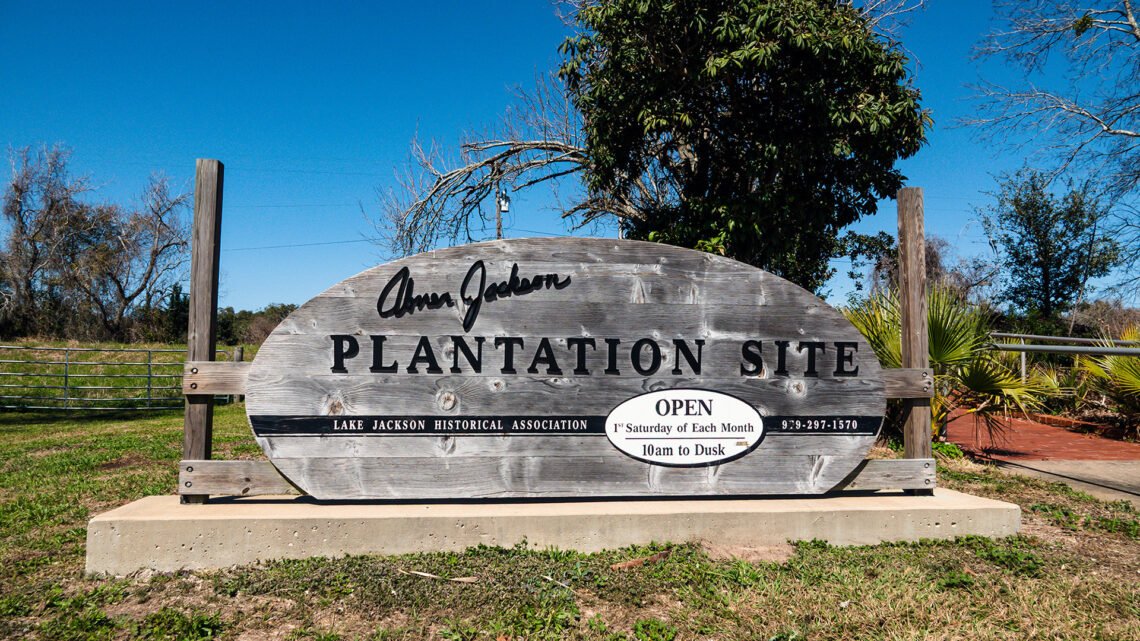
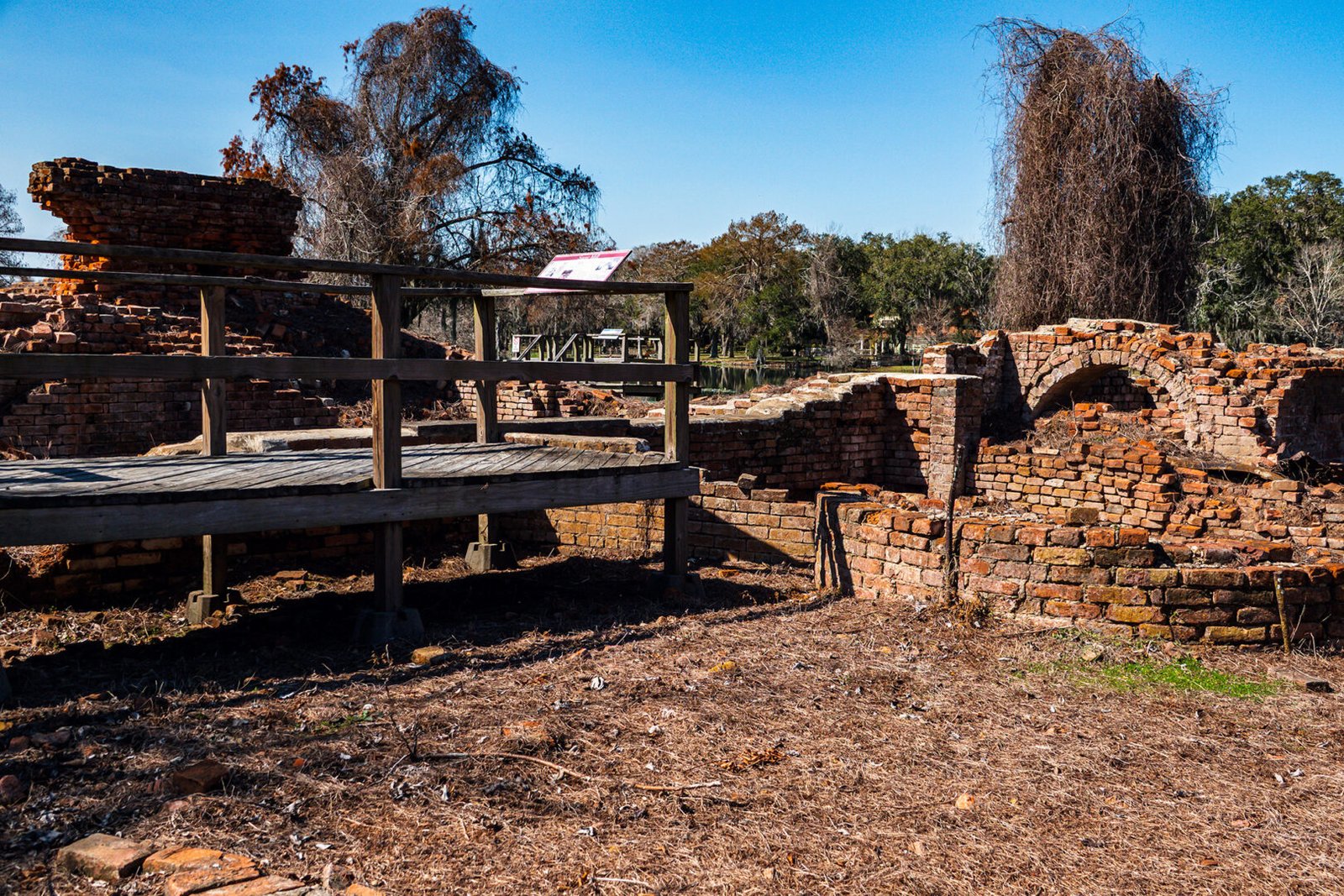
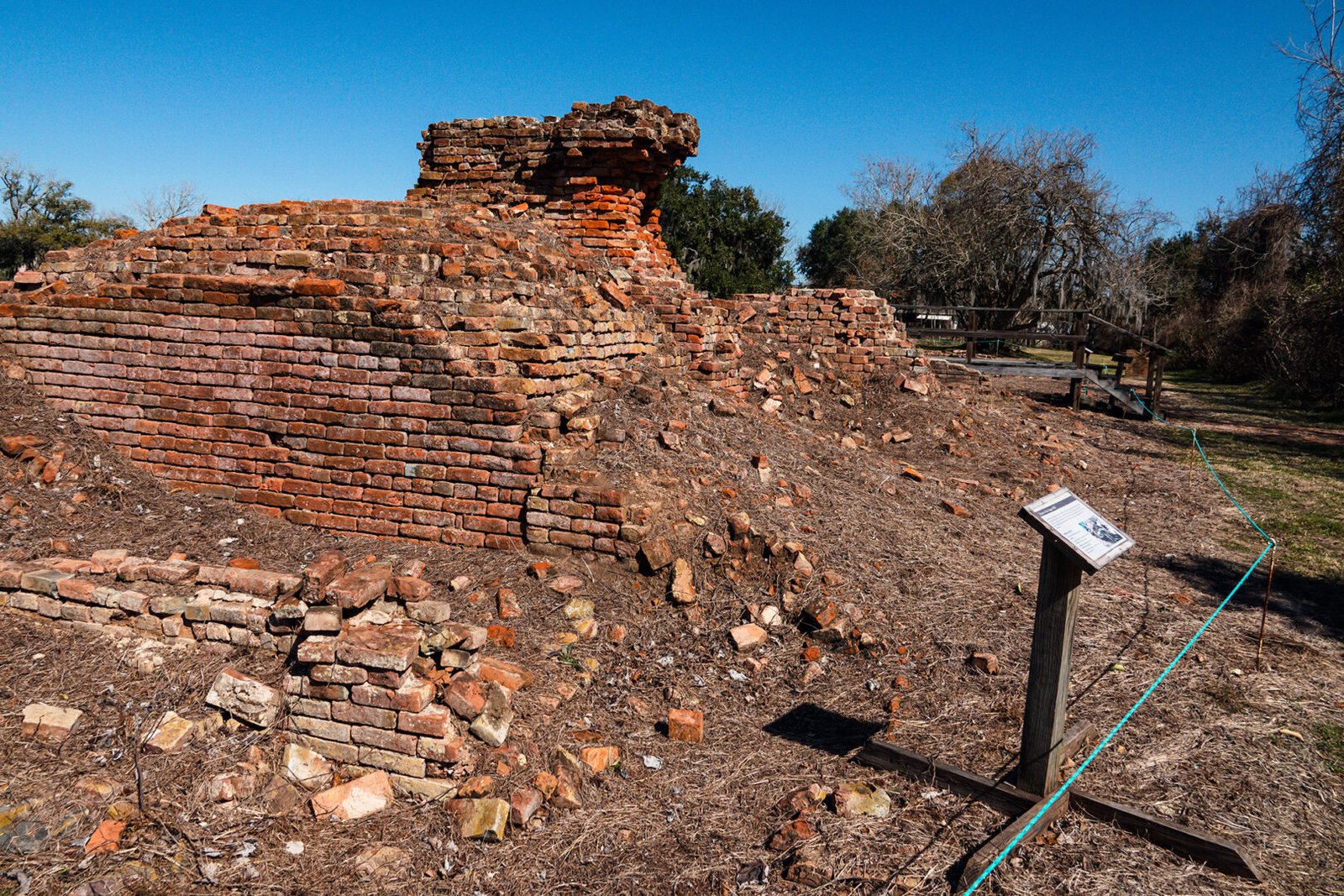
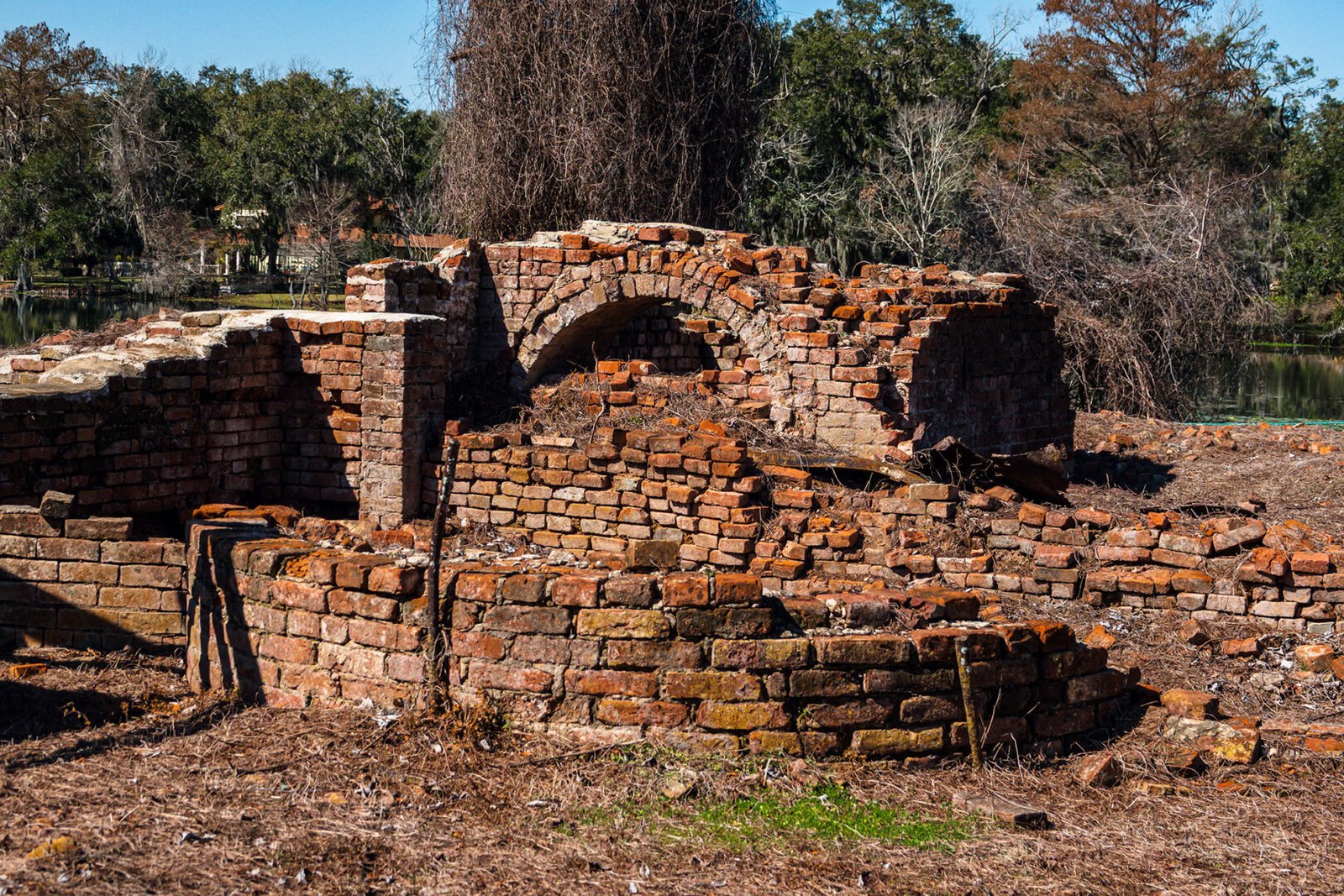
Sitting beside FM 2004 near the bustling community of Lake Jackson, the Abner Jackson Plantation Site offers a poignant look at sugar production on an antebellum South plantation. This archaeological landmark, managed by the Lake Jackson Historical Association, preserves the remnants of one of Texas’s most prosperous sugar plantations that operated from the 1840s until 1900. What remains today is not a restored mansion or living-history farm but raw archaeological ruins—crumbled brick foundations, scattered masonry, a massive sugar kettle, and the shade of ancient live oaks—set on land that once formed part of a massive sugar plantation. Now, visitors can stroll among interpretive markers describing the sugar-making process, peer into excavated pits, and feel the weight of history beneath their feet.
Initially called Lake Place after the oxbow lake formed here by the Brazos River, the Lake Jackson Plantation was founded in the 1840s by Major Abner Jackson. Born in Virginia, Jackson came to Texas from South Carolina with his wife, five children, and about 80 slaves. This would be the second of three properties he owned in the area and the center of his operations. Here Jackson built an impressive complex that included a stately brick mansion with towering pillars and galleries, a sophisticated sugar mill, and other supporting structures.
Abner and his wife, Margaret, spared no expense on their Lake Jackson home. The main residence was a twelve-room, two-story mansion boasting six galleries, towering brick pillars, and ornamental gardens. Costing more than $25,000 (excluding slave labor), the house was stuccoed with inch-thick cement and whitewashed to mimic expensive stone. An artificial island in the lake served as an exclusive entertaining space. The centerpiece of the property was a state-of-the-art brick sugar mill equipped first with horse-driven rollers and upgraded in 1858 with a steam engine. In 1852 alone the plantation reportedly produced 295 hogsheads of sugar (about 295,000 pounds!).
The plantation’s story is one of tarnished rise and dramatic fall. At its peak, the plantation sprawled across more than 4,600 acres cultivating sugarcane in the fertile “sugar bowl” of Texas. By 1860 Abner Jackson owned 285 enslaved people, making him the second-largest slaveholder in Texas, with holdings valued at $172,775—though much of the fortune was mortgaged and illusory. Debt, family disputes, and the Civil War eroded the Jackson fortune. His four sons served in the Confederate army. Two did not survive the war. Abner Jackson died deeply in debt on August 31, 1861 and the Civil War brought emancipation which ended the era of slave labor.
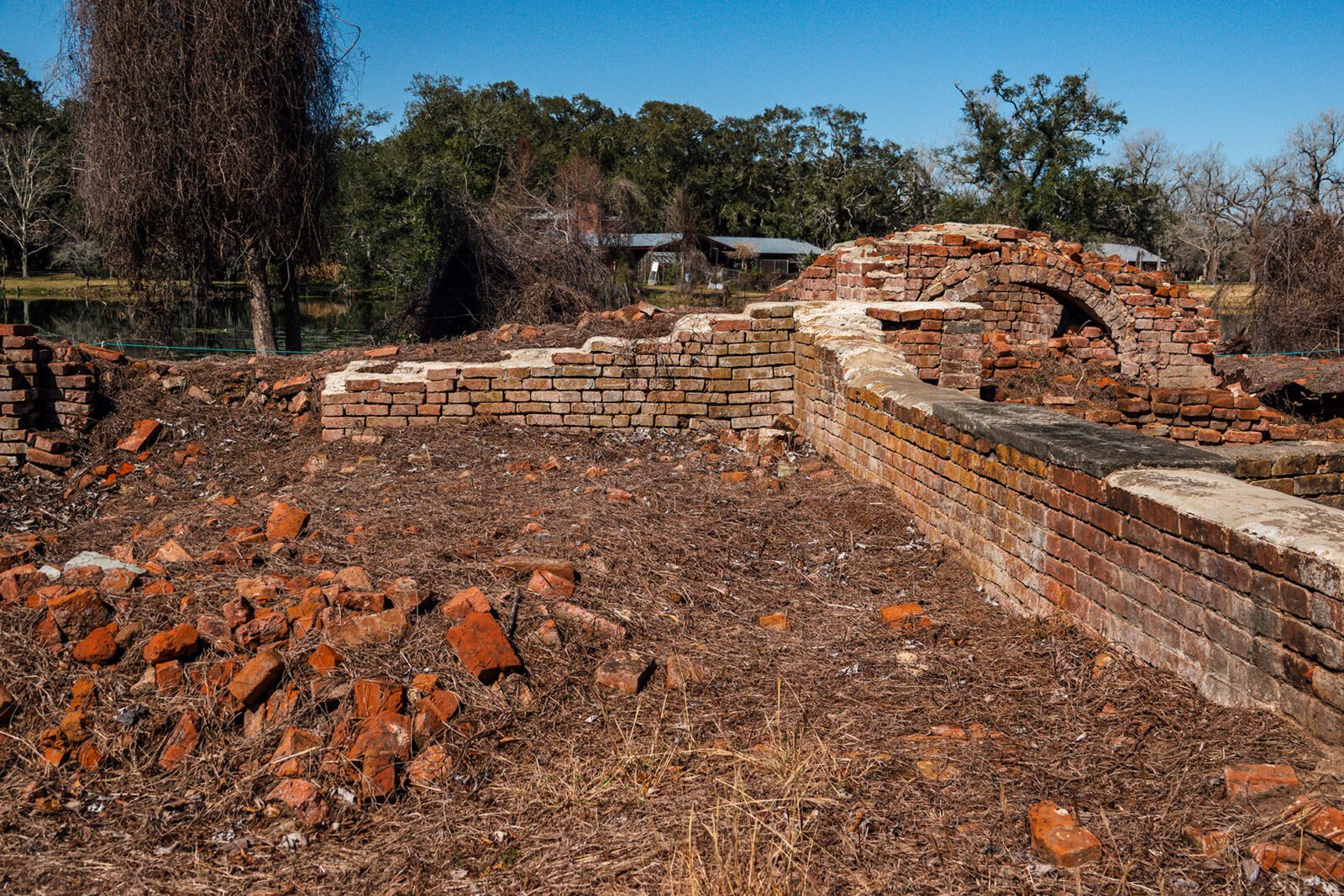
Postwar, the family leased convicts from the Texas prison system to continue sugar operations, another grim chapter marked by documented abuse and deaths. Inheritance disputes eventually tore the family apart. In 1867, after a court ruling granted control of Lake Jackson to George W. Jackson, he fatally shot his brother John C. during an argument at the plantation. George himself later died of tuberculosis in 1871. None of the sons married, and the estate was sold piecemeal. Then the devastating 1900 Galveston hurricane delivered the final blow, leveling much of the complex, ruining the house and mill.
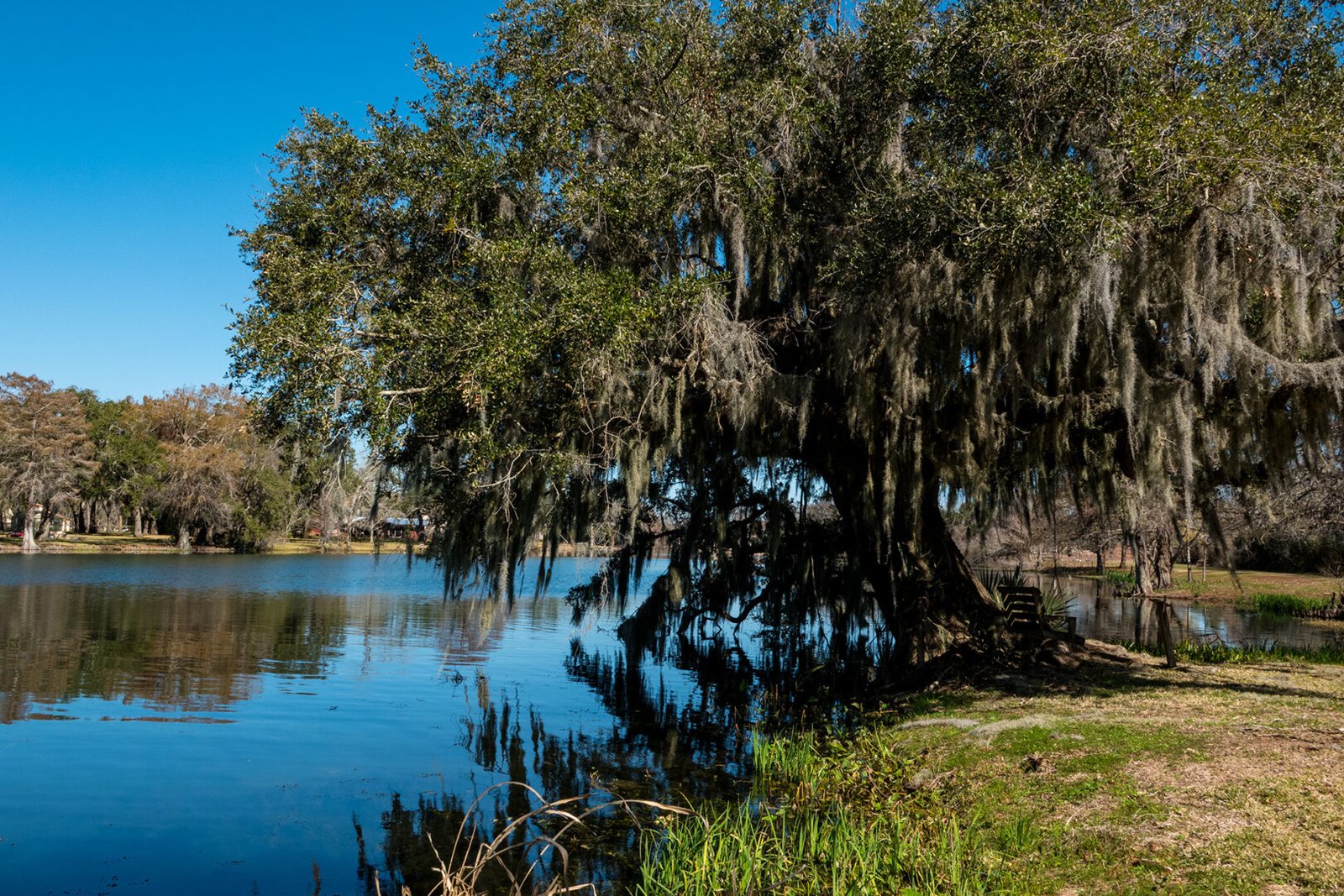
Over time, nature reclaimed the land until archaeological work brought the site’s physical story back to light. Designated a State Antiquities Landmark, the plantation has been studied since 1992 with major excavations conducted by the Texas Archeological Society during field schools in the 1990s. Researchers uncovered twelve structures across roughly four acres, including the main house, kitchen, carriage house, storeroom, washroom, and sugar mill. Brick foundations reveal the mill’s kettle settings and flue chimney. The house’s porch and galleries show high-quality masonry—rounded steps and walkways crafted by skilled enslaved artisans—contrasting with cruder convict-era additions. Artifacts include bottle glass, buttons, tools, and even an engraved pocket watch, all offering clues to daily operations and the transition from slavery to convict leasing. Slave quarters, located across the lake, remain unexcavated.
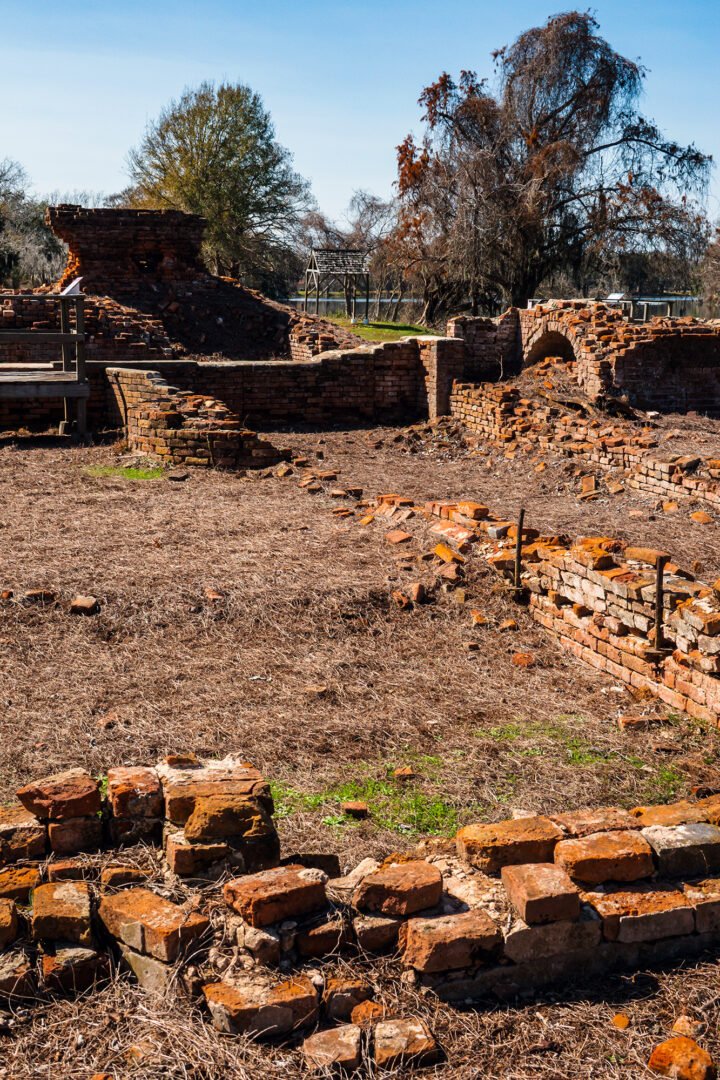
Today, visitor access to the plantation site is limited. The site is open on the first Saturday of each month from 10 a.m. to 4 p.m., with free guided or self-guided tours led by knowledgeable volunteers from the Lake Jackson Historical Association. Information signs bring the history alive, explaining how enslaved labor transitioned to convict labor after emancipation, and how sugar refining shaped early Texas industry. And for deeper context, pair your visit with the nearby Lake Jackson Historical Museum, which features exhibits on the plantation era, interactive displays, and animatronic figures recounting local stories.